As Switzerland's oldest university, founded in 1460, the University of Basel has long been a leading research institution in Europe. Not only does it possess a rich history, but its academic achievements and international reputation are also exceptional. Many students ponder: is the University of Basel a good choice? Based on its QS World University ranking and the Nobel laureates it has produced, the strength of this institution is beyond question. Below, Grove Education provides a detailed analysis of the academic programmes, admission requirements, and tuition fees at the University of Basel, helping you gain a comprehensive understanding of this prestigious Swiss university.
Overview of the University of Basel
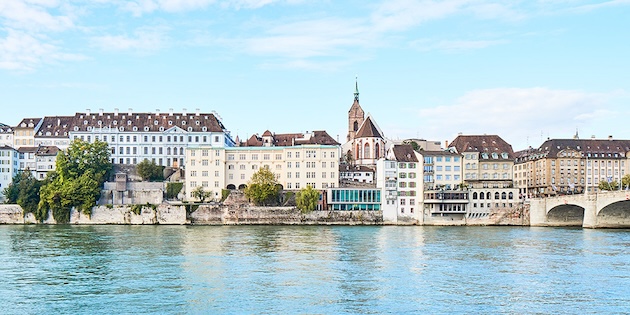
The University of Basel (Universität Basel) is located in the cultural city of Basel, at the junction of Switzerland, Germany, and France. It is the oldest university in Switzerland, forming the cornerstone of the Swiss academic system alongside esteemed institutions such as ETH Zurich and EPFL.
Renowned internationally for its outstanding research output, the university has a robust impact, particularly in life sciences, medicine, and the humanities and social sciences. Basel is an important global centre for pharmaceuticals and life sciences, hosting the headquarters of multinational companies such as Novartis and Roche. This proximity offers exceptional opportunities for industry collaboration and internships for relevant academic programmes.
The university comprises seven faculties: Theology, Law, Medicine, Humanities and Social Sciences, Natural Sciences, Business and Economics, and Psychology [1]. This diverse academic structure reflects the University of Basel’s ambition in interdisciplinary research. Moreover, the institution is a member of Eucor (The European University of the Rhine), a multinational academic alliance connecting five leading universities in Switzerland, Germany, and France, allowing students to take courses and conduct research across borders, showcasing the university’s international advantages [2].
Source: University of Basel
QS Ranking Performance of the University of Basel
When assessing the strength of the University of Basel, authoritative international rankings serve as crucial reference points. So, how does the University of Basel perform in the QS rankings?
According to the official data from the 2026 QS World University Rankings, the University of Basel is ranked 158th globally. This ranking reflects its outstanding performance in factors such as academic reputation, research impact, and the proportion of international students [3].
Within Switzerland, the University of Basel ranks among the top five universities, highlighting its significant position in the Swiss higher education landscape.
Additionally, it ranks 80th globally in the QS Sustainability Rankings 2026, demonstrating its contributions to sustainability issues related to environmental, social, and governance factors [4].
Understanding the Strengths of Academic Programmes at the University of Basel
Several academic fields at the University of Basel are globally renowned, with its outstanding academic environment having nurtured numerous thinkers and scientists who have changed the world. For students wishing to study in Switzerland, choosing these programmes means they will follow in the footsteps of historical giants:
Medicine and Life Sciences
This has long been a popular field of study at the University of Basel, with Nobel Prize winners Tadeus Reichstein and Werner Arber having previously taught at this institution [5][6]. If you aspire to pursue leading-edge research in this area, consider applying for the Bachelor of Science in Pharmaceutical Sciences [7] or the Bachelor of Science in Biology [8].
Notable alumni include Nobel laureate Paul Hermann Müller and Rolf Martin Zinkernagel. Additionally, Carl Gustav Jung, a prominent figure in psychology, also graduated from this university [9][10][11]. For those aiming to join their ranks, the Bachelor of Human Medicine is a must-apply programme at the University of Basel [12].
Humanities and History
The humanities at the University of Basel have a long and distinguished history. The renowned philosopher Friedrich Nietzsche was appointed as a professor of classical philology at the university at the age of just 24 [13]. If you are interested in his academic field, the Bachelor of Arts in Ancient Civilizations is the ideal corresponding course [14].
Additionally, the eminent cultural historian Jacob Burckhardt was also a notable professor at this institution [15]. Students who are passionate about history and culture may consider applying for the Bachelor of Arts in History [16] or the Bachelor of Arts in Art History [17].
QS Rankings of Programmes at the University of Basel
Below is a comparison of popular fields of study at the University of Basel and their respective QS rankings:
| Subject Area | QS Global Ranking 2025 [3] |
|---|---|
| Biological Sciences | 84 |
| Anatomy and Physiology | 51-100 |
| Pharmacy and Pharmacology | 97 |
| Dentistry | 51-120 |
| Classics and Ancient History | 51-150 |
The data presented clearly illustrates the University of Basel's strong competitiveness in the fields of healthcare and the humanities. For students interested in these areas, applying to such programmes would be an excellent choice.
Source: University of Basel
Tuition Fees and Living Expenses at the University of Basel
When considering the merits of the University of Basel, budget for tuition and living expenses is also an essential aspect of planning for international studies. According to information from the University of Basel's official website, the tuition fee structure in Switzerland is relatively transparent and reasonable [18]:
1. Tuition Fees:
The University of Basel charges tuition on a semester basis. For both Bachelor's and Master's programmes, the basic tuition fee is CHF 850 per semester. Doctoral candidates are required to pay CHF 350 per semester, with additional administrative fees for course changes ranging from CHF 50 to CHF 150.
2. Additional Costs :
In addition to the aforementioned basic tuition fees, applicants should also be aware of the following extra costs:
- Application Fee: A one-time application fee of CHF 100 is charged for applicants holding foreign qualifications [19].
- Visa and Residence Permit Fees: International students are responsible for covering the associated processing fees.
3. Living Expense Budget :
As one of Switzerland's major cities, living costs in Basel are relatively high.
The University of Basel estimates that international students should budget between CHF 1,500 and CHF 2,200 per month for living expenses, depending on the type of accommodation and personal spending. The official budget lists the monthly expenses for students living away from home, including: food (CHF 350), transport (CHF 100), health insurance (CHF 200), and miscellaneous expenses [20]. Rental costs for shared accommodation range from approximately CHF 500 to CHF 900 [21]. Consequently, students should place emphasis on accurate planning of living expenses when calculating the total cost of studying abroad.
Admission Requirements for the University of Basel
To successfully apply for admission to the University of Basel, students from Hong Kong must meet the university's criteria for overseas qualifications.
Bachelor's Degree Admission Requirements
Hong Kong Diploma of Secondary Education (HKDSE)
- Applicants must achieve Level 3 or above in six subjects and obtain admission proof for the chosen programme from a recognised university in Hong Kong [22].
International Baccalaureate (IB) Diploma
- A minimum score of 32 points is required (out of a possible 42, not counting bonus points for Theory of Knowledge and Extended Essay), with six subjects in designated categories.
- At least three subjects must be at Higher Level (HL), and one HL subject must be in either experimental sciences or mathematics [23].
Master’s Degree Admission Requirements
- Educational Background: Applicants must hold a Bachelor’s degree from a programme recognised by the University of Basel.
- Relevance of the Course: Your Bachelor’s degree must have substantial equivalence in academic content with the Master’s programme applied for. This means that the subjects studied at the Bachelor’s level must encompass the prerequisite knowledge required for the Master’s programme.
- Grade Requirements: For applicants holding degrees from Swiss or non-Swiss universities of applied sciences or teacher education institutions, an average grade (GPA) of at least 5.0 is required (on the Swiss grading scale, where the maximum is 6.0 and 5.0 represents "Good") [24].
Language Requirements
The majority of courses at the University of Basel are taught in German; therefore, proficiency in German is an essential admission criterion. The university also requires applicants to demonstrate a minimum level of proficiency in English.
The majority of courses at the University of Basel are taught in German; therefore, proficiency in German is an essential admission criterion. The university also requires applicants to demonstrate a minimum level of proficiency in English.
- German Language Requirement: According to the language requirements outlined on the University of Basel's official website, applicants must possess C1-level proficiency in German according to the Common European Framework of Reference (CEFR) [25].
- English Language Requirement: If applying to a Master’s programme conducted in English, proof of English proficiency is required, such as an IELTS score of 6-7 or an equivalent level (specific requirements vary by programme) [26].
Source: University of Basel
Is the University of Basel a Good Choice? GROVE Education Analyzes Your Options
After analysing the QS ranking and the strengths of various academic programmes at the University of Basel, if you have decided to apply and require professional guidance to meet the university's stringent admission criteria, contact Grove Education’s expert consultants today. We will provide you with the most accurate interpretation of official information and tailor application strategies, assisting you in standing out among numerous applicants and making a successful entry into your desired programme, thus beginning your study journey in Switzerland!
References:
1. University of Basel - Faculties & Departments
2. EUCOR - Member universities
3. QS Top Universities - University of Basel
4. QS Top Universities - Sustainability 2026
5. The Nobel Prize - Tadeus Reichstein
6. The Nobel Prize - Werner Arber
7. University of Basel - Bachelor of Science in Pharmaceutical Sciences
8. University of Basel - Bachelor of Science in Biology
9. The Nobel Prize - Paul Müller
10. The Nobel Prize - Rolf M. Zinkernagel
11. Britannica - Carl Jung
12. University of Basel - Bachelor of Human Medicine
14. University of Basel - Bachelor of Arts in Ancient Civilizations
15. The British Museum - Jacob Burckhardt
16. University of Basel - Bachelor of Arts in History
17. University of Basel - Bachelor of Arts in Art History
18. University of Basel - Tuition Fees
19. University of Basel - Bachelor's studies with foreign educational qualifications
20. University of Basel - Bitte orientieren Sie sich beim Ausfüllen des Stipendienantrages
21. University of Basel - Costs
22. University of Basel - Admission to bachelor’s studies with foreign educational qualifications
23. University of Basel - Admission with the International Baccalaureate Diploma (IB/DP)
24. University of Basel - Admission to master’s studies
25. University of Basel - Language Skills
26. University of Basel - Reglement betreffend den Nachweis von Englischkenntnissen auf Niveau