Uppsala University is a prestigious institution in Sweden, often referred to as the "Cambridge of Sweden." Many students are curious about the strengths and competitiveness of this world-class university. Grove Education will guide you through the latest rankings and popular programmes at Uppsala University, as well as the essential application requirements that international students must understand to take a crucial step in their study abroad journey.
Background of Uppsala University
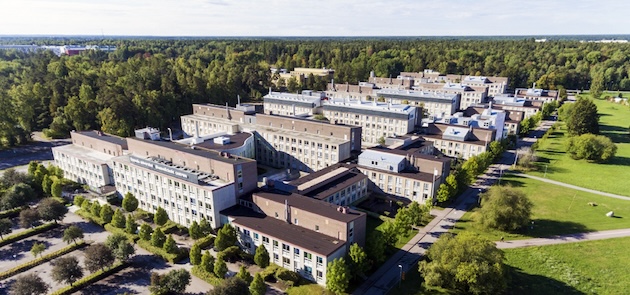
Founded in 1477, Uppsala University is the oldest university in Sweden and the entire Nordic region, established by Archbishop Jakob Ulvsson [1]. The university encompasses 11 campuses [2], primarily concentrated in the city of Uppsala, which serves not only as the provincial capital but also as a vital industrial, military, and transport hub in Sweden.
In its early years, Uppsala University primarily focused on theology, philosophy, and law [1]. Today, it has expanded to encompass a wide range of disciplines, emerging as a modern institution renowned for its research strengths in artificial intelligence, molecular life sciences, and sustainable energy and materials. The university actively engages in collaboration with international universities, businesses, and public institutions to enrich and promote research and education [3].

Source: Uppsala University
Ranking of Uppsala University
Uppsala University holds a high standing in the global higher education landscape. According to the 2026 QS World University Rankings, Uppsala University is ranked 93rd in the world [4], having risen 10 places from the previous year [5]. This underscores a steady improvement in its academic influence. Furthermore, the Academic Ranking of World Universities (ARWU) consistently places the university among the top 100 globally [6].
In Sweden, Uppsala University ranks just behind Lund University and the Royal Institute of Technology [4], demonstrating exceptional performance in areas such as academic reputation, student-to-faculty ratio, and citation of research. Notably, the university is the birthplace of several Nobel Prize winners, including chemist Svante Arrhenius [7] and biologist Arne Tiselius [8], reinforcing its status in research and innovation.
Introduction to Uppsala University's Programmes
Uppsala University comprises nine faculties [9], covering various disciplines:
- Faculty of Arts: Archaeology and Ancient History, Philosophy, History, Art History, Music, Game Design, Cultural Anthropology, and Ethnology
- Faculty of Educational Sciences: Department of Education
- Faculty of Languages: English, Linguistics, and Literature, Scandinavian Languages
- Faculty of Law: Department of Law
- Faculty of Medicine: Medical Sciences, Public Health, Nursing Science, Immunology, Surgical Science, Genetics, and Pathology
- Faculty of Pharmacy: Pharmacy, Pharmaceutical Biosciences, Pharmaceutical Chemistry
- Faculty of Science and Technology: Computer Science, Mathematics, Physics and Astronomy, Earth Sciences, Materials Science and Engineering, Chemistry, Civil and Industrial Engineering
- Faculty of Social Sciences: Economics, Business Studies, Political Science, Psychology, Peace and Conflict Studies
- Faculty of Theology: Department of Theology [10]
The most competitive programmes at Uppsala University include Medicine, Industrial Engineering and Management, Psychology, and Law [11], which typically have the highest admission scores and stringent specific entry requirements, necessitating exceptional academic performance and comprehensive application documents.
Source: Uppsala University
Uppsala University's Application Requirements
To apply for a bachelor's degree at Uppsala University, students must meet both general and specific eligibility criteria. The general qualifications require candidates to have completed secondary education and possess university entrance qualifications, alongside a strong command of English. Specific qualifications depend on the chosen programme, which may require the completion of certain subjects, such as mathematics or science [12].
General Admission Requirements: Secondary School or International Baccalaureate
The following are the minimum thresholds for Hong Kong and mainstream international diplomas, aiding students in assessing whether they meet Uppsala University’s admission requirements:
| Diploma Type | Minimum Requirements |
|---|---|
| UK GCE A-Level | At least 2 GCE A-Level courses plus 5 different subjects from GCSE/IGCSE/Ordinary Level [13] |
| IB Diploma | Completion of the full diploma, meeting specific programme requirements [14] |
| HKDSE | Completion of the full diploma with a minimum of Level 1 in English [15] |
| HKCEE | Requires HKALE or HKASLE, with a minimum of Grade C in English [15] |
Specific Subject Entry Requirements
Specific subject requirements ensure that students have studied relevant disciplines at a certain depth during their secondary education. The specific entry requirements for core subjects at Uppsala University are detailed in the programme introductions, and include requirements such as:
| Subject | Swedish Upper Secondary Level | Learning Depth Requirements |
|---|---|---|
| Mathematics | Level 1–5 | Basic Mathematics (Level 1) sufficient for general programmes; Advanced Mathematics (Levels 4, 5) for more specialised courses |
| Science | Level 1, 2 | General science courses require Level 1 Natural Sciences, with Biology, Chemistry, and Physics knowledge. Some programmes (e.g., Biomedical, Chemistry, Physics) require Level 2 |
| Social Sciences & History | Level 1, 2 | Social Science and History courses require the relevant subjects at Levels 1 and 2 |
| Modern Languages | Level 1–7 | Certain language or literature programmes require one or more subjects in modern languages that are not Swedish, English, classical Greek, or classical Latin [16] |
Language Proficiency Requirements
Before applying to Uppsala University, applicants should note that most programmes require students to achieve at least Level 6 in Swedish upper secondary English, with some programmes requiring Level 7. Students can meet these requirements through the following tests and scores:
| Test | Required Score (Swedish Upper Secondary English Level 7/English Level 3*) | Required Score (Swedish Upper Secondary English Level 6/English Level 2*) |
|---|---|---|
| IELTS Academic | Overall score of 7.0, with no less than 6 in each component | Overall score of 6.5, with no less than 5.5 in each component |
| TOEFL iBT | Overall score of 100, with at least 20 in Writing | Overall score of 90, with at least 20 in Writing |
| Cambridge English | C2 level 200 or CPE certificate | C1 level 180 or CAE certificate |
| Pearson PTE Academic / Online | Overall score of 68, with at least 61 in Writing | Overall score of 62, with at least 61 in Writing [17] |
* Level 7 and Level 3 are equivalent courses; Level 6 and Level 2 are equivalent courses
If the number of eligible applicants exceeds the available places, Uppsala University will rank candidates based on their qualifications. Therefore, it is advisable for students to achieve the highest possible diplomas and English scores to enhance their competitiveness and admission chances.
Uppsala University's Application Process
The application process for Swedish universities, including Uppsala University, is standardised and centralised, primarily conducted through the University Admissions website. Applicants must first register an account and then follow these main application steps:
- Browse and Sort Course Preferences: Selecting and ranking desired programmes is the most important step for applying to Uppsala University and impacts the chances of admission. Each student can choose up to 8 degree programmes but only has a total of 45 credits' worth of places. If the first two programme preferences exceed 45 credits, the later preferences will be removed [18].
- Pay the Application Fee: Applicants from non-EU and European Economic Area countries must pay an application fee of 900 Swedish Krona [19].
- Submit Application Documents: Applicants must submit copies of their passport, upper secondary graduation certificate, academic transcripts, and English language test results. Some programmes may also require the submission of essays, motivation letters, and additional documents [20].

Source: Uppsala University
Understand Uppsala University's Application Requirements: Grove Education Helps You Achieve Your Dreams
Through this analysis, it is hoped that you now have a comprehensive understanding of Uppsala University's rankings, advantages, and programmes. In the face of highly competitive top programmes, accurately grasping Uppsala University's application requirements, processes, and document stipulations is crucial for successful admission. If you are planning to apply to this university but are struggling with the preparation of materials and strategic planning, please contact Grove Education. Our professional team can design a bespoke application strategy to ensure you stand out in the fierce competition.
References:
1. Uppsala University - History of Uppsala University
2. Uppsala University - The University area
3. Uppsala University - Long-term development through strategic partnerships
4. QS Top Universities - QS World University Rankings 2026: Top global universities
5. QS Top Universities - QS World University Rankings 2025: Top global universities
6. Shanghai Ranking - 2025 Academic Ranking of World Universities
7. Uppsala University - Svante Arrhenius - Uppsalaalumn och nobelpristagare
8. Uppsala University - Arne Tiselius
9. Uppsala University - Faculty
10. Uppsala University - Departments and centres
11. Uppsala University - Admissions to this autumn’s courses and programmes up by 6.2 percent
12. Uppsala University - Entry requirements
13. University Admissions - United Kingdom, bachelor's admission
14. University Admissions - International Baccalaureate studies
15. University Admissions - Hong Kong, China, bachelor's admission
16. University Admissions - Bachelor's requirements
17. University Admissions - English language requirements
18. University Admissions - Rank your selections
19. University Admissions - Pay your application fee (non-EU/EEA)
20. University Admissions - Find out what you need to submit