Renowned for its world-class education system and exceptional quality of life, Switzerland is a premier destination for international students. However, the country is also known for its high cost of living. How can Hong Kong students strategically plan to turn their dream of studying in Switzerland into a reality? This article provides a detailed guide to university recommendations, tuition fees, and admission processes, alongside a comprehensive budget for living expenses, to help you plan your academic future step-by-step.
Why Choose Switzerland for Your Master’s Degree?
The Swiss higher education system is internationally acclaimed, comprising several cantonal public universities, two federal institutes of technology, and various universities of applied sciences. Cantonal Universities are funded by state governments; these public institutions offer relatively low tuition fees for Master’s programmes and tend to focus on academic research. In contrast, the Federal Institutes of Technology (such as ETH Zurich) are managed directly by the Swiss federal government, focusing on science and engineering with world-leading global rankings.
Situated in the heart of Europe and surrounded by the stunning landscapes of the Alps and other mountain ranges, Switzerland offers a unique multilingual environment. With German, French, and Italian as official languages, students can immerse themselves in a truly multicultural and international atmosphere. Furthermore, Switzerland serves as a global hub for international organisations—including the United Nations and the World Trade Organisation (WTO)—as well as the headquarters of numerous multinational corporations. This proximity provides students, particularly those in Business, International Affairs, and Public Management, with a wealth of internship and employment opportunities.

Source: Study in Switzerland
Top Swiss Universities for Master’s Study
When studying for a master’s in Switzerland, you will find that the choice of universities is far broader than many people expect. Beyond the traditional strengths in engineering and business, Switzerland is also internationally recognised for hospitality management education.
Below are three universities with global reputations across engineering/technology, business, and hospitality management—meeting the needs of students from different academic backgrounds and career goals.
1. ETH Zurich (Swiss Federal Institute of Technology in Zurich)
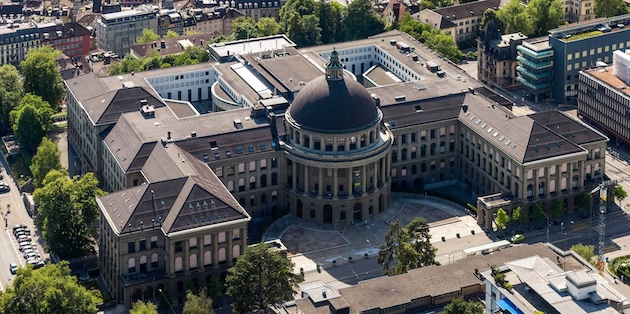
As the alma mater of Albert Einstein [1], ETH Zurich (Eidgenössische Technische Hochschule Zürich) boasts a rich history spanning over 170 years and stands as a premier science and technology university both in Switzerland and globally. The institution consistently maintains a top position in global rankings, currently placing 7th. Popular subjects such as Earth and Marine Sciences, Geology and Geophysics have consistently ranked 1st worldwide in the QS World University Rankings by Subject for several consecutive years [2].
Global Ranking Performance:
- QS World University Rankings: Ranked 7th globally in 2026.
- Times Higher Education (THE) World University Rankings: Ranked 11th globally in 2026 [3].
2. University of St.Gallen, HSG
Recognised as one of the world's leading business schools, the University of St. Gallen holds the prestigious "Triple Crown" accreditation (EQUIS, AACSB and AMBA). Only a select few business schools globally achieve this, signifying world-class educational quality, research output and graduate employability. The university offers a diverse range of elite Master's programmes in management, business analytics, economics, law and international affairs. Notably, its Master's in Banking and Finance has consistently ranked within the global top 10 in the Financial Times Master's rankings for many years [4].
3. EHL Hospitality Business School
Switzerland is understandably the first choice for many students pursuing postgraduate studies in hospitality. EHL Hospitality Business School is widely considered the birthplace of hospitality management education and the pinnacle institution in this field. Its English-taught Master's programmes emphasise a strong integration of theory and practice. Graduates are highly sought after by international luxury hotel brands, premium service industries and top-tier consulting firms. EHL performs exceptionally well in the QS World University Rankings by Subject [5]:
- Hospitality and Leisure Management: Ranked 1st globally for eight consecutive years (2019–2026), achieving perfect scores in both academic reputation and employer reputation [6].
- Business & Management Studies: Ranked 7th domestically in Switzerland for 2026 [7].
Source: ETH Zurich
Overview of Swiss Tuition Fees
When studying a Master's in Switzerland, tuition fees vary significantly depending on the type of institution (public or private) and the nature of the programme. Public universities are heavily subsidised by the government, making them highly affordable. In contrast, many prestigious private institutions operate independently of the public system and charge higher fees, which can reach up to €43,000 annually. For specific degrees, fees may be calculated based on the total number of courses or credits. Additionally, fees at certain private schools (such as top hospitality schools) often encompass accommodation and board. Below is a reference guide for annual tuition fees [8]:
| University Type | Annual Tuition Fee (EUR) | Annual Tuition Fee (HKD) |
|---|---|---|
| Public Universities | €400 – €3,700 | HK$3,400 – 31,300 |
| Private Universities | Up to €43,000 | Up to €43,000* |
Note: The source text listed the HKD column for private universities as "43,000 EUR". I have translated it exactly as provided. The estimated fees above do not include additional administrative charges levied by individual institutions.
Living Costs in Switzerland: Budgeting for One of the World's Most Expensive Countries
Given the high local living costs, international students must carefully calculate their day-to-day expenses to establish a comprehensive budget. According to the latest 2026 data, the estimated monthly living cost for an international student in Switzerland ranges from CHF 1,800 to CHF 2,500 (approximately HK$18,000 to HK$25,000). The exact amount will vary depending on the city and your personal spending habits. Zurich and Geneva rank among the most expensive cities not just in Switzerland, but globally, whereas cities like Bern and Fribourg offer comparatively lower living costs [9].
In Switzerland, it is mandatory for all international students to purchase either public or private health insurance. Universities typically provide or recommend specific insurance schemes. Below is a breakdown of estimated monthly living expenses:
| Expense Category | Estimated Monthly Cost (CHF) | Estimated Monthly Cost (HKD) |
|---|---|---|
| Accommodation (Shared) | 600 - 1,200 CHF | HK$7,000 - 12,000 |
| Food & Groceries | 400 - 600 CHF | HK$4,000 - 6,000 |
| Mandatory Health Insurance | 100 CHF | HK$800 - 1,200 |
| Transport | 60 - 100 CHF | HK$600 - 1,000 |
| Study Materials | 50 - 100 CHF | HK$500 - 1,000 |
| Total Estimated Spend | 1,290 - 2,120 CHF | HK$12,900 - 21,200 |
How to Apply: The Admissions Process for a Swiss Master's
Because application procedures vary across institutions and programmes, we strongly advise starting your document preparation and application process roughly a year in advance. Always refer to the official university guidelines for precise details. The general workflow is as follows:
- Select Your Target University and Course: Choose your preferred institution and programme, paying close attention to specific entry criteria and required documentation.
- Prepare Academic and Language Documents: Based on the university's requirements, gather necessary documents well in advance. This typically includes your degree certificate, academic transcripts, letters of recommendation and proof of English language proficiency (e.g., IELTS/TOEFL).
- Submit Your Application: Master's applications in Switzerland are usually submitted via the university's official portal between December and April. You will need to pay an application fee and upload your supporting documents.
- Await Results and Offers: The review process can take anywhere from a few weeks to several months. Depending on the university and course, you may also be invited to attend an interview.
- Apply for Visas and Residence Permits: Upon receiving an offer, you must apply for a student visa. After arriving in Switzerland, this visa is then converted into a residence permit. Specific procedures and required documents vary by canton and university, so we recommend consulting your institution or a professional education consultant about six months in advance.
Source: ETH Zurich
Contact Grove Education Today to Plan Your Swiss Study Journey
With its unparalleled educational quality, Switzerland attracts countless students applying for Master's programmes every year. However, studying there requires meticulous financial planning for both tuition and living costs. Grove Education's highly experienced team is here to manage the complex procedures for you—from admissions applications and document preparation to budget planning and visa processing. Contact Grove Education today, and let us provide a seamless, one-stop service to launch your journey towards academic excellence.
References:
1. ETH Zurich - Nobel Prize laureates
2. Top Universities - ETH Zurich
3. Times Higher Education - ETH Zurich
4. University of St.Gallen - Ranking Results
5. Top Universities - EHL Hospitality Business School
6. Top Universities - Rankings by Subject 2026: Hospitality & Leisure Management
7. Top Universities - Rankings by Subject 2026: Business & Management Studies
8. Study in Switzerland - Private vs. Public Schools in Switzerland