In recent years, the horizons of Hong Kong students planning higher education abroad have expanded significantly beyond traditional English-speaking destinations such as the UK, US, or Australia. Faced with global inflation and consecutive increases in tuition fees, continental European countries—boasting premier education systems, deep cultural heritage, and highly competitive living costs—have steadily become hot favourites. This comprehensive guide provides an in-depth analysis of the distinct advantages of pursuing a Master's degree in Spain, recommends elite university tracks, outlines realistic financial budgets, and presents a step-by-step application blueprint to ensure a seamless study abroad journey to Europe.

Source: Universidad Autónoma de Madrid
Tuition Fees and Cost of Living Forecast
According to data published by Study International, pursuing a Master’s degree in the UK demands an annual tuition fee ranging between £8,400 and £20,000 (approx. HK$84,000 – HK$ 200,000), whilst costs in the US can escalate to between USD 30,000 and USD 120,000 (approx. HK$230,000 – HK$ 940,000) per annum [1].
Compared to these capital-intensive locations, the financial landscape in Spain is exceptionally attractive. Because the Spanish government allocates substantial public subsidies to higher education, international students can access world-class academic training at highly reasonable price points:
1. Credit-Based Billing Structure
Tuition fees at the majority of Spanish public universities are calculated formulaically based on the European Credit Transfer and Accumulation System (ECTS). A standard Master’s degree requires the completion of 60 to 120 credits (academic tracks spanning one to two years) [4]. For non-EU international students, the cost per ECTS credit varies depending on the regional policies of the specific autonomous community and the academic faculty.
2. Public Universities vs Private Institutions [2]
- Public Universities: Standard registration contributions for undergraduate tracks range between €700 and €1,700 per academic year, whilst postgraduate Master’s fees range comfortably between €1,000 and €3,500 per annum (approx. HK$9,100 – HK$ 31,900).
- Private Universities & Elite Business Schools: Independent of public subsidies, private fees are higher, occasionally reaching up to €20,000 per annum (approx. HK$182,000).
Overall, Spain’s educational outgoings remain among the lowest across major Western European nations, rendering it a highly strategic option for budget-conscious students seeking a premier European postgraduate qualification.
3. Regional Variations and Strategic Costing [3]
Living expenses in primary metropolitan centers—such as the capital city, Madrid, and the cultural hub, Barcelona—range between €900 and €1,200 per month (approx. HK$7,650 – HK$ 10,200). In contrast, secondary university towns such as Valencia or Seville offer a more relaxed pace with living costs dropping to between €700 and €900 per month (approx. HK$5,950 – HK$ 7,650). Crucially, however, the two primary metropolises serve as Spain's dominant commercial hubs, housing a dense concentration of multinational corporate headquarters and international organisations, thereby providing graduates with significantly more diverse career placement opportunities.
How to Select a Spanish University
Spain houses some of Europe’s most historic and prestigious higher education institutions, delivering a top-tier standard of pedagogy. When evaluating your choices, we recommend moving beyond overall global rankings and performing a comprehensive audit based on your specific undergraduate background and long-term career trajectory:
1. Official Degrees vs University-Specific Qualifications [4]
Prospective applicants must first clarify the fundamental distinction between the two types of degrees awarded in Spain:
- Official Master’s Degrees (Máster Oficial): Regulated directly by the Spanish Ministry of Education and fully accredited across the European Higher Education Area (EHEA). These curricula place a heavy emphasis on formal academic research and deep technical specialization, utilizing rigorous scientific methods. Crucially, an official degree grants direct eligibility to articulate into a PhD programme, making it the ideal route for research-driven scholars.
- University-Specific Degrees (Títulos Propios): Designed and awarded independently by individual universities outside the constraints of the national state curriculum framework. Consequently, their modules are highly agile and closely aligned with immediate commercial market demands, frequently featuring elite industry practitioners as guest lecturers. These qualifications are highly respected by private sector employers for their practical focus. However, under current Spanish statutory regulations, credits earned via a university-specific degree cannot be utilized for doctoral entry.
2. Globally Renowned Elite Business Schools
If your ultimate ambition is to excel in the global corporate arena, Spain offers world-leading private business schools. In the authoritative Financial Times Global MBA Ranking, IESE Business School is ranked 4th in the world [5], whilst ESADE Business School claims the 7th spot globally [6]. While their tuition structures are considerably higher than public university rates, their powerful global alumni associations, exclusive corporate internship resources, and exceptional graduate starting salaries ensure an outstanding return on investment.
3. Research-Driven Public Universities
For comprehensive public academic excellence, institutions such as the University of Barcelona, Autonomous University of Madrid, Pompeu Fabra University, and Complutense University of Madrid represent premier choices. These historic landmarks boast immense research capabilities and deliver outstanding performances across all classic academic disciplines.
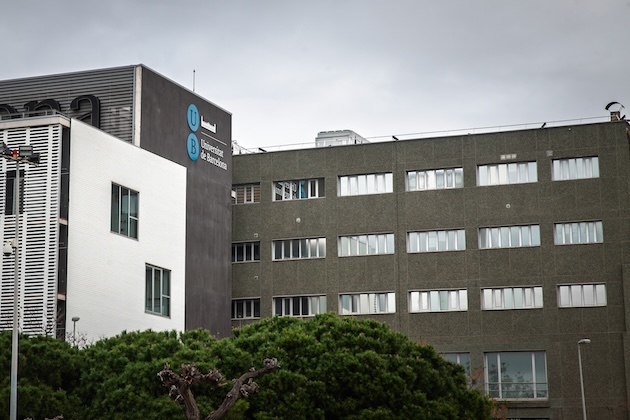
Source: Shutterstock
Recommended Disciplinary Sectors in Spain
Targeting a sector with strong market potential is an essential step for a successful study abroad experience. Spain holds distinct, world-leading advantages in several key fields:
1. Business, Management, and Trade Analytics
Business disciplines remain a heavily subscribed asset for international scholars in Spain. Whether pursuing a flagship MBA, International Trade, Strategic Marketing, FinTech, or Big Data Analytics, the course frameworks are designed to match contemporary European market shifts.
For instance, the MSc in International Business at the UPF Barcelona School of Management (UPF-BSM) is ranked 10th globally and 7th in Europe in the specialized QS International Trade Rankings, securing a near-perfect score of 99.8/100 for innovative teaching—the highest performance across Europe [7].
2. Sustainable Tourism, Event, and Hospitality Management
As the world’s second most visited nation, Spain operates an exceptionally sophisticated tourism and hospitality ecosystem. According to data published by the World Travel & Tourism Council (WTTC), the sector accounts for approximately 16% of Spain's total GDP, driving the creation of over 3.2 million industry positions [8]. Selecting a Master's track in International Tourism Policy, Mega-Event Planning, or Luxury Hotel Management allows students to master world-class service sector management models while securing internships with global luxury chains to elevate their professional CVs.
3. The Proliferation of English-Taught Programmes
Many students from Hong Kong are concerned that not knowing Spanish will compromise their academic success. In reality, Spain is a highly internationalised European nation, and its higher education institutions have fully internationalised their faculties, offering an extensive array of fully English-taught Master’s degrees, particularly across Business, Advanced Engineering, Data Science, and International Relations. Concurrently, Spanish stands as the world's second most spoken native language; utilizing your residency to acquire fluency in Spanish will dramatically increase your competitive advantage in the global market, particularly within emerging Latin American trade sectors.
Postgraduate Admissions and Application Guide
While entry requirements at Spanish universities are accessible, securing a place at a top-tier faculty demands a precise understanding of the local application sequence and timeline.
1. Mastering the Application Timeline [9]
The vast majority of postgraduate courses in Spain commence annually in the autumn (September to October). However, the admissions cycle initiates approximately six to nine months prior, with portals opening in early spring and closing progressively between April and July.
Because international credit mapping, document translation, and student visa clearance standardly require three to six months to process, Grove Education strongly advises candidates to finalize their university shortlists and initiate document compilation between October and February of the preceding year. Submitting your file during the initial Round 1 or Round 2 windows substantially increases your probability of admission, student housing allocation, and merit-based scholarship funding.
2. Compiling the Portfolio Checklist
In addition to degree certificates and academic transcripts, institutions standardly require the submission of a professional Curriculum Vitae (CV), a tailored Statement of Purpose (Motivation Letter), formal academic reference letters, and valid proof of proficiency in the medium of instruction (such as an IELTS Academic report or alternative approved language qualifications). Furthermore, specific faculties place immense weight on an applicant's prior research background, specialized competencies, or professional work experience, mandating that these be comprehensively itemised within the CV [10].
Prospective students are strongly advised to precisely audit the document criteria of each target institution before formal submission; because processing rules and module specifications vary significantly across different universities and Master's tracks, a single generic checklist must never be used to prepare all applications.
3. The Legalisation and Sworn Translation Protocol
Your official undergraduate degree scroll and complete university transcripts must undergo the following strict legalisation process prior to submission:
- The Hague Apostille: Documents must be legally authenticated via the Hague Apostille framework issued by the High Court of Hong Kong [10].
- Sworn Translation: Authenticated folders must be translated into Spanish exclusively by a certified Sworn Translator (Traductor Jurado) formally recognized by the Spanish Ministry of Foreign Affairs [11].
- Equivalence Statement: Specific universities require applicants to process a formal "Statement of Equivalence of Average Grades" (Declaración de Equivalencia) via the Spanish Ministry of Education portal to map your cumulative undergraduate GPA onto the standardized Spanish 10-point academic grading scale.
Because these cross-border administrative procedures can take several months to complete, early deployment is vital to prevent missing deadlines due to delayed documentation.

Source: Shutterstock
Achieve Your Academic Ambitions in Europe with Grove Education
Pursuing higher education in a non-traditional, continental European destination requires clear direction and a sophisticated strategy. Navigating distinct state degree frameworks, managing multi-layered international legalisation protocols, and selecting the optimal faculty that matches your career trajectory can be complex. Any minor oversight can delay your enrollment.
The expert overseas consultancy team at Grove Education possesses a deep understanding of European higher education frameworks and student visa policies. We are dedicated to constructing a bespoke academic blueprint for every candidate, delivering objective profile audits and precision university mapping to protect your application from common pitfalls.
Whether you are evaluating course structures, tracking credit metrics, or requiring guidance on the Sworn Translation process, contact Grove Education today. Let us support you in taking center stage in the global corporate arena and stepping confidently into a rewarding student life in Europe.
References
1. Study International - Master’s in the UK vs EU vs US
3. Uniplaces City Explorer - Student Life in Spain: Your Complete Guide for 2026–2027
5. IESE Business School - IESE MBA ranks fourth in the world in the Financial Times MBA Ranking 2026
6. ESADE Business School - Esade Full-Time MBA ranked 7th in the world by the Financial Times
7. UPF Barcelona School of Management - The MSc in International Business at UPF-BSM ranks in the global Top 10 according to the QS International Trade Rankings 2025
8. World Travel & Tourism Council (WTTC) - Spain's tourism sector could exceed €260 billion by 2025, according to WTTC
9. StudyinEurope.eu - Application Deadlines for Spain — 2026
11. Hague Apostille UK - Legalising Degree Certificates for Use in Spain
12. Lawyers & Accountants - Apostille and Authentications in Madrid, Spain