In recent years, Paris Sciences & Lettres University (Université PSL) has achieved stellar results across major international league tables. Its pedagogical quality and research impact are highly acclaimed globally, with multiple faculties ranking among the absolute best in Europe. For students planning to study abroad in France, mastering the specific course options, rankings, and entry requirements at Université PSL is the definitive first milestone towards a successful application.
In this comprehensive guide, Grove Education provides a detailed breakdown of PSL's undergraduate and postgraduate portfolios to help you strategically map out your financial budget and application pathway.
Institutional Profile and Academic Elite Background
Université PSL (Paris Sciences & Lettres), located in the heart of Paris, is a premier public research university. The institution was formed through the integration of several of France’s most historic and prestigious Grandes Écoles and specialized schools—including the École Normale Supérieure (ENS - PSL), Chimie ParisTech - PSL, and Université Paris-Dauphine - PSL—inheriting the absolute pinnacle of the French elite higher education framework.
As a comprehensive university that seamlessly fuses the natural sciences, engineering, humanities, social sciences, and the arts, PSL aims to reflect, represent, and shape the diversity of contemporary society and the future world. Students at PSL benefit from extensive interdisciplinary resources and deep institutional collaborations with world-leading research bodies, providing a robust platform to acquire international experience and build a world-class foundation for their future corporate or academic careers [1].
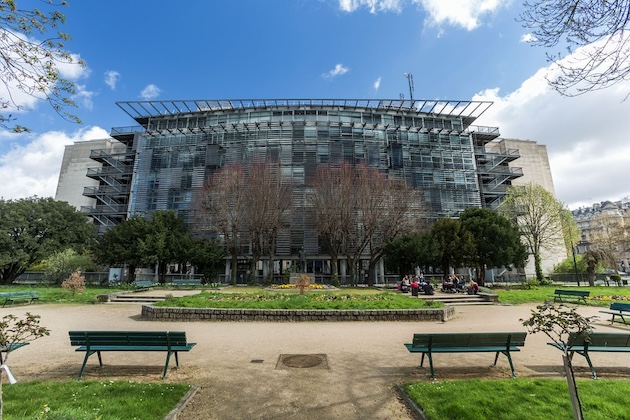
Source: Université PSL
Authoritative Global Rankings and Prestige
Université PSL delivers an outstanding performance at the top of global league tables. It securely maintains its position as the number one university nationally in France while standing shoulder-to-shoulder with elite UK and US icons on the international stage.
In the QS World University Rankings 2026, PSL is ranked 34th globally and 2nd in Western Europe [2], demonstrating its formidable research strength and peerless global academic reputation. The university also maintains elite positions across other authoritative international frameworks:
- Times Higher Education (THE) World University Rankings 2026: Ranked 48th globally [3] and 2nd in the world in the specialized THE Young University Rankings [4].
- Academic Ranking of World Universities (ARWU / Shanghai Ranking) 2025: Ranked 34th globally [5], securely anchoring its top-tier world status for consecutive cycles.
Flagship Programmes and Disciplinary Portfolios
Comprising several of France's top elite schools, Université PSL offers a diverse selection of undergraduate and postgraduate tracks. Key English-medium and bilingual disciplines include [6]:
1. Undergraduate (Bachelor's) Programmes
- Fully English-Taught: International Bachelor of Science in Artificial Intelligence. This is a premier flagship undergraduate track designed for high-calibre international scholars. The curriculum is delivered 100% in English, aiming to shape future analytical decision-makers who can deploy AI technologies to drive global change.
- Partially English-Taught: Tracks include Sustainability Sciences, Mathematics & Computer Science, and Organisational Sciences. Taking the BSc in Sustainability Sciences as a structural model, the proportion of English-taught modules increases progressively: 40% in Year 1, 60% in Year 2, and 100% in Year 3.
2. Postgraduate (Master's) Programmes
Fully English-Taught Pathways
- Sciences & Engineering: Physics; Astronomy & Astrophysics; Chemistry; Mathematics; Computer Science; Data Science; Life Sciences; Engineering Sciences; Earth Sciences; and Quantum Engineering.
- Social Sciences, Economics & Management: Quantitative Economics; Analysis & Economic Policy (APE); Applied Economics; Finance; AI & Society; and Fashion & Materials.
Partially English-Taught Pathways
- Sciences & Engineering: Sustainability Sciences; ESPCI Paris - PSL; École Normale Supérieure - PSL Graduate Degree; Chimie Paris - PSL; and Mines Paris - PSL.
- Social Sciences, Economics & Management: Advanced Management Research; Control, Auditing & Financial Reporting; Management & Organisations; Economics & Finance; and Law.
Tuition Fees and Financial Structure
Tuition fees at Université PSL depend on an applicant's legal tax residency, the specific level of study, and the exact degree pathway. The university’s standard public departments strictly follow the national statutory fee metrics set by the French Ministry of Higher Education. However, premier international, fully English-taught tracks (such as the specialized AI Bachelor's) operate under independent, custom fee models.
1. French Public University Statutory Tuition Fees
Non-EU international students are standardly subject to the national "Differential Tuition Fee" regulations. Complete exemptions are only granted to a small minority of students who satisfy explicit scholarship or identity criteria. The official statutory fee structure for regular public tracks in the 2026/2027 academic year is outlined below [7]:
EU, EEA, and Swiss Confederation Nationals
Local European students continue to benefit from heavy financial subsidies by the French state. The statutory registration fees are:
- Bachelor’s (Licence) Tier: €178 per annum
- Master’s Tier: €254 per annum
- Engineering Diplomas (Titre d'Ingénieur): €628 per annum (Note: Flagship technical colleges such as Mines Paris - PSL operate specialized internal fee structures; applicants should verify rates on the specific institutional pages).
Non-EU International Students (Subject to Differential Fees)
Incoming international students from outside the EU who do not qualify for exemptions must pay the differential rate, which covers one-third of the actual educational cost (two-thirds remains subsidised by the state):
- Bachelor’s (Licence) Tier: €2,895 per annum
- Master’s Tier: €3,941 per annum
Ancillary Levy: Regardless of nationality, all registered higher education students in France must settle the mandatory Student and Campus Life Contribution (CVEC), which stands at approximately €105 per annum [8], dedicated to supporting student healthcare, social welfare, campus sports, and cultural initiatives.
Criteria for Non-EU Exemption from Differential Tuition Fees
According to the latest official admissions guidelines, non-EU international applicants can bypass differential rates and pay the basic local European statutory fees (€178 for Bachelor's / €254 for Master's) if they meet one of the following criteria:
- Subsidised Scholarship Holders: Recipients of a French Government Scholarship (BGF) or a full institutional registration fee waiver awarded directly by the host faculty or university.
- Reciprocal Inter-University Agreements: Students whose home university operates a formal exchange agreement with Université PSL (such as Erasmus+ schemes) that explicitly mandates the reciprocal waiver of registration levies.
- Academic Continuity Proviso: Returning students who were granted a formal fee exemption during the 2025/2026 cycle and are continuing the identical degree track at the same host institution for the 2026/2027 academic year.
- Statutory Residency Status: International scholars holding a French long-term residence card, those who file taxes directly in France, or those linked to a French tax-paying household for over 2 consecutive years; alongside individuals holding recognized Refugee Status or subsidiary humanitarian protection.
- Advanced Doctoral Researchers: All international scholars registered in a formal Doctoral programme (PhD) or an HDR track are exempt from differential fees regardless of nationality.
Flagship English-Medium Independent Fee Structure
Applicants targeting the premier, fully English-taught International Bachelor of Science in AI bypass the regular public framework. This flagship track utilizes an independent, custom fee architecture [9]:
| Student Residency Category | 2026/2027 Annual Tuition Fee Structure |
|---|---|
| EU Member State Tax Residents | Calculated progressively based on Adjusted Gross Income (AGI), ranging from €0 to a maximum of €14,900 per annum. |
| Non-EU International Students | Fixed flat rate of €19,500 per annum. |
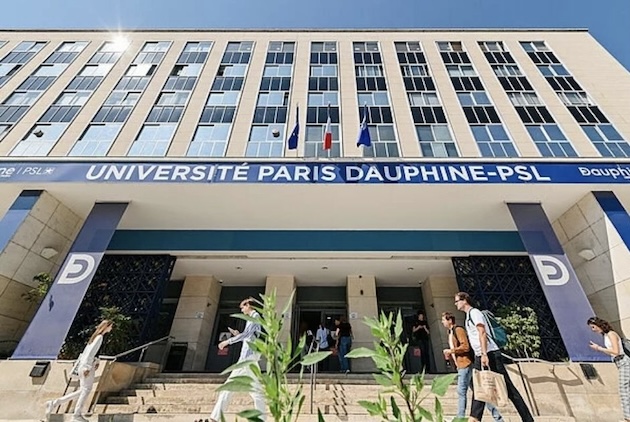
Source: Université PSL
Admissions Requirements and Entry Thresholds
Because Université PSL comprises several distinct elite institutions, entry criteria vary across faculties. Applicants must review individual course specifications on their respective pages. The university enforces rigorous standards for academic merit, discipline mapping, and language proficiency.
Academic Merits and Prerequisites
- Undergraduate (Bachelor's) Applications: The general selection rate at PSL stands at only 4%, giving an absolute edge to students with top academic marks. Applicants must present a secondary school leaving certificate (such as the IB Diploma, GCE A-Levels, or equivalent qualifications), backed by strong performance in relevant subject areas [10].
- Postgraduate (Master's) Applications: Applicants must hold a recognised Bachelor’s degree in a highly relevant field. To build a competitive profile, the admissions board expects a strong undergraduate record, typically requiring a minimum cumulative GPA of 3.5 out of 4.0, with flagship technical or quantitative faculties recommending a 3.7 or above [11].
Language Proficiency Standards
Linguistic thresholds are strict and depend on the medium of instruction [6]:
- French-Medium Tracks: Standardly require a certified DELF/DALF score of B2 or higher.
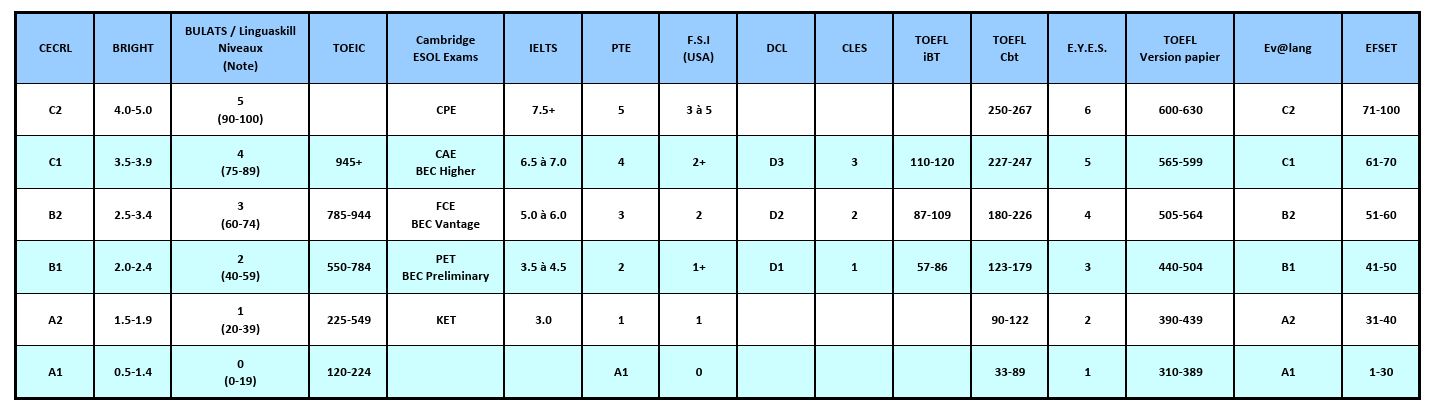
- English-Medium Tracks: Require a minimum of CEFR B2 (e.g., an IELTS Academic overall band of 5.0 to 6.0, or a TOEFL iBT score of 87 to 109) or CEFR C1 (e.g., an IELTS Academic overall band of 6.5 to 7.0, or a TOEFL iBT score of 110 to 120) depending on the faculty. Highly competitive research or business programmes may also require a valid GMAT or GRE score report.
Note: The central admissions office stipulates that if an English-taught programme page does not list an explicit score requirement, international applicants must demonstrate a minimum baseline of CEFR B2 or C1 level to ensure they can manage advanced coursework and research successfully [6].
The official CEFR mapping against major standardised English examinations is compiled in the baseline matrix below:
Application Channels and Process Guides
Prospective applicants must align their preparation with the correct application portal and institutional schedules, which vary by degree level, nationality, and faculty [12].
Undergraduate Entry Channels
International students targeting a Bachelor’s degree navigate distinct application routes based on their secondary school leaving qualifications:
- Parcoursup Portal: Candidates holding a French Baccalauréat or tracking standard European routes must apply via France’s national Parcoursup system.
- DAP Process: Non-EU international students who do not hold a French qualification and are targeting specific tracks—such as the BSc in Sustainability Sciences or the BSc in Computer Science—must apply via the formal Demande d'Admission Préalable (DAP) pipeline.
- Independent Institutional Portals: Applicants targeting flagship international tracks, such as the International Bachelor of Science in AI or the International Bachelor in Engineering for the Environment (I-BE³), must submit their applications directly through the programme's dedicated standalone platform.
Postgraduate Taught Master’s Channels [13]
Applicants for Master’s degrees should execute their applications according to the following strategic steps:
1. Programme Selection: Audit the official digital catalog to match your academic background with English-medium or bilingual tracks.
2. Platform Verification: Ensure you track the correct closing windows, which are divided into two main systems for the current admissions cycle:
- PSL Central Portal: Used for the majority of English-taught Master's degrees and competitive 5-year PhD tracks. The application window runs from 15 January to 24 February.
- Mon Master National Platform: Billed for regular public university faculties. The application window runs from 17 February to 16 March.
3. International Student Procedures: * Standard Framework: Upon receiving a formal unconditional offer from PSL, international students register on the Études en France platform to complete the mandatory pre-consular administration required for student visa clearance.
- Dauphine - PSL Tracks: Specific departments enforce strict dual-application rules, requiring candidates to submit separate portfolios via both the Dauphine - PSL internal system and the Études en France portal simultaneously.
Admissions Portfolio Checklist [14]
Required documents and language specifications vary by faculty. Master’s applicants should compile the following certified digital files:
- Fully completed online application form.
- Comprehensive, up-to-date CV.
- Tailored Statement of Purpose / Personal Statement.
- Official transcripts and degree scrolls covering all three or four years of your undergraduate degree. (Applicants targeting direct entry into Master Year 2 must submit complete transcripts and proof of completion for their Master Year 1 phase).
- Formal academic or professional Letters of Recommendation.
- Mandatory Certified Translation Law: All official credentials (diplomas and transcripts) that are not originally issued in English or French must be accompanied by a certified translation produced by an accredited, sworn translator.
- Supplemental Portfolio Assets (Subject to Faculty Prerequisite): Valid copy of your passport or ID card; certified language test results (TOEFL iBT, IELTS, GMAT, GRE, DELF/DALF); creative design portfolios, academic writing samples, or research proposals; and professional reference letters or certificates of employment.
Source: Université PSL
Realise Your Academic Ambitions in France with Grove Education
Université PSL represents the absolute peak of French higher education, offering elite global rankings, an unparalleled research ecosystem, and an exceptional corporate network for ambitious international students. However, navigating its highly competitive 4% undergraduate entry threshold, distinct institutional portals, and strict ECTS credit-mapping requirements demands a sophisticated strategy.
If you are evaluating course options, want to analyze language requirements, or require professional advice on profile building, contact the consultancy team at Grove Education. Our professional advisors provide expert, end-to-end strategy management—from strategic university selection and certified translation mapping to personal statement polishing—ensuring your application stands out in the elite admissions pool. Contact Grove Education today to secure your future in Paris.
References
1. Université PSL - About Us
2. QS Top Universities - QS World University Rankings 2026: Top global universities (Université PSL #28)
3. Times Higher Education (THE) - World University Rankings 2026: Paris Sciences et Lettres – PSL Research University Paris
4. Times Higher Education (THE) - Best young universities in the world 2024
5. Shanghai Ranking (ARWU) - 2025 Academic Ranking of World Universities (Université PSL #34)
6. Université PSL - Master's programs taught entirely in English
7. Campus France - Tuition fees in France 2025-2026
8. Étudiant.gouv - ÉtudiantCVEC : une contribution pour de multiples actions
9. Université PSL - International Bachelor of Science in AI
10. Université PSL - Bachelor's degree
11. Université PSL - Master's degrees admissions procedures
12. Université PSL - International admissions procedures at PSL
13. Université PSL - Master's degrees admissions procedures
14. Université PSL - FAQ Graduate admissions