The KTH Royal Institute of Technology stands as one of Sweden's most prestigious technical universities, uniting students, researchers, and educators from around the globe to focus on scientific innovation and its application to societal development. With a prominent global ranking, KTH emphasises collaboration with various industries, allowing students the opportunity to tackle real-world problems while cultivating professional skills and creative thinking. This article, compiled by GROVE Education, provides insights into KTH’s tuition fees, academic strengths, and application highlights, assisting you on your journey to one of Europe’s top technical institutions.
Background of KTH Royal Institute of Technology
Founded in 1827, KTH Royal Institute of Technology is the largest and oldest engineering school in Sweden, ranking prominently in Northern Europe. Renowned for its excellence in the fields of technology and engineering, KTH has produced over a third of Sweden's engineering graduates [1]. Notable alumni include Spotify co-founder Daniel Ek [2], former Ericsson Chief Research Officer Sara Mazur [3], and Sweden's first astronaut Christer Fuglesang [4]. This demonstrates KTH’s exceptional ability to nurture innovative thinkers and leaders to a world-class standard.
Global Ranking of KTH Royal Institute of Technology
According to the QS World University Rankings for 2026-2027, KTH is ranked 82nd [5], and it ranks 98th in the latest Times Higher Education (THE) rankings [6]. Furthermore, several of its academic programmes rank within the top 50 globally in the 2026 QS subject rankings, including [7]:
- Mechanical Engineering: 20th
- Electrical Engineering: 20th
- Materials Science: 24th
- Architecture and Built Environment: 44th
- Chemical Engineering: 51st
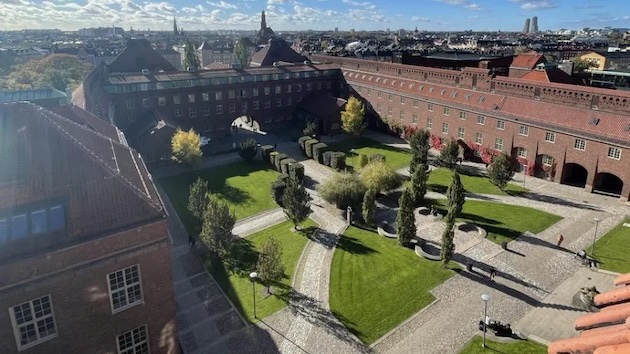
Source: KTH Royal Institute of Technology
Programme Structure at KTH Royal Institute of Technology
Bachelor's Programmes
Most of KTH's undergraduate programmes are taught in Swedish, and applicants must demonstrate sufficient proficiency in the language. The only programme taught in English is the Bachelor of Science in Information and Communication Technology, which is a three-year course designed for international students [8]. This programme covers areas such as machine learning, programming, 6G communications engineering, and artificial intelligence [9].
Master's Programmes
At the master's level, KTH’s departments are renowned for their leading research in engineering, natural sciences, and emerging technologies, offering over 60 master’s programmes [10]. These courses combine theoretical research with industry collaboration, providing students exposure to cutting-edge research techniques and applications. Below are summaries of key popular departments:
- Mechanical Engineering: This programme includes subjects such as fluid dynamics, solid mechanics, and acoustics and vibrations, placing a strong emphasis on the integration of theory and practice in collaboration with leading companies like Scania and Bombardier. Graduates are equipped to address diverse industrial challenges, making it one of KTH’s most sought-after programmes [11].
- Materials Science: Focused on the processing, structure, and properties of metallic materials, this programme offers flexible elective arrangements to allow students to pursue areas of personal interest. Topics include casting, metal forming, corrosion, and surface protection, with opportunities for practical experience through collaborations with industry [12].
- Electric Power Engineering: This programme aims to equip students with expertise in power systems, energy conversion, electrical design, and power markets. The curriculum is designed to be flexible, enabling students to specialise in areas of interest while integrating environmental, sustainable development, and social philosophy studies [13].
- Architecture: The curriculum consists of foundational architectural courses and multiple workshop courses. Students explore contemporary architectural issues and must complete six design projects, culminating in an independent graduation design to showcase their professional architectural capabilities [14].
- Civil and Architectural Engineering: This programme offers two specialisations focusing on infrastructure design, construction and maintenance technology, and performance- and lifecycle-oriented building engineering design. Students learn how to apply their knowledge in structural engineering, civil engineering, and architectural engineering to real-world projects while participating in industry collaborative projects [15].
Tuition Fees at KTH Royal Institute of Technology
KTH employs a fee structure based on nationality and residency status for both undergraduate and master's programmes. Citizens of the EU, EEA, and Switzerland are exempt from tuition fees and application fees, while other international students are required to pay applicable fees [16].
Overview of Undergraduate Tuition Fees
For students who are non-EU citizens, KTH's tuition fees for a three-year programme encompassing 180 ECTS credits [17]. The details of the tuition fees are as follows (in SEK) [16]:
| Applicant Status | EU/EEA/Switzerland Citizens | Non-EU/EEA/Switzerland Citizens |
|---|---|---|
| Tuition Fees | SEK 423,000 (for 3-year programme | Exempt from Tuition Fees |
| Application Fee | SEK 900 | Exempt from Application Fee |
It is important to note that KTH does not offer scholarship funding for bachelor's level programmes.
Overview of Master's Tuition Fees
KTH’s master's tuition fees cover a two-year programme totalling 120 ECTS credits. The fees are as follows [18]:
| Applicant Status | EU/EEA/Switzerland Citizens | Non-EU/EEA/Switzerland Citizens |
|---|---|---|
| Tuition Fees | SEK 360,000 (for 2-year programme) | Exempt from Tuition Fees |
| Application Fee | SEK 900 | Exempt from Application Fee |
Generally, citizens from the EU, EEA, or Switzerland do not have to pay any application or tuition fees, although certain joint master's programmes may have associated costs.
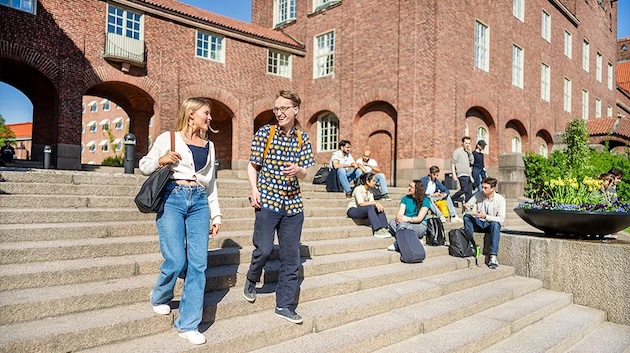
Source: KTH Royal Institute of Technology
Application Requirements for KTH Royal Institute of Technology
KTH’s impressive global ranking and competitive admission criteria necessitate that applicants adhere closely to the university's requirements to enhance their chances of acceptance. Below are the primary application points for both undergraduate and master's programmes.
Undergraduate Application Score Requirements
Students from Hong Kong can apply to KTH’s undergraduate programmes using the following qualifications and proof of English language proficiency [19]:
- The Hong Kong Diploma of Secondary Education (HKDSE) officially issued by the Hong Kong Examinations and Assessment Authority (HKEAA).
- Alternatively, the results from the Hong Kong Certificate of Education Examination (HKCEE) and the Hong Kong Advanced Level Examination (HKALE) or the Hong Kong Advanced Supplementary Level Examination (HKASLE) are also acceptable.
Undergraduate English Language Requirements
The English language proficiency requirements for most undergraduate programmes must meet the Swedish upper secondary level English 6 (or Level 2). Therefore, Hong Kong students applying to KTH must submit proof of English language proficiency, such as [20]:
- Achieving a minimum pass/standard grade in English in the HKDSE.
- Achieving a grade of C in English in the HKCEE, HKALE, or HKASLE.
Alternatively, candidates can evidence their proficiency through internationally recognised English tests according to course requirements (English 6/Level 2 or English 7/Level 3).
| Test | English 6 / Level 2 (Common Requirement) | English 7 / Level 3 (Higher Requirement) |
|---|---|---|
| IELTS Academic | Overall score ≥ 6.5, no individual score < 5.5 | Overall score ≥ 7.0, no individual score < 6.0 |
| TOEFL iBT | Overall score ≥ 90, writing ≥ 20 | Overall score ≥ 100, writing ≥ 20 |
| Pearson PTE Academic | Overall score ≥ 62, writing ≥ 61 | Overall score ≥ 68, writing ≥ 61 |
| Cambridge English | C1 Advanced (CAE), overall score ≥ 180 | C2 Proficiency (CPE) overall score ≥ 200 |
| Cambridge Michigan | Pass (or hold) the English Proficiency Certificate Examination (ECPE) | Not applicable for ECCE |
Additionally, completion of a 60 ECTS credit English-taught course may also meet the English language requirement (the course must be offered by accredited institutions within the EU/EEA, Switzerland, or certain English-speaking countries such as the UK, US, Canada, Australia, etc.).
Master's Application Points
The application criteria and required documents vary slightly depending on the field of study at KTH. For example, applicants to the architecture department must submit a portfolio of up to nine pages, including three to four academic design projects [21]. Overall, the admissions review for engineering programmes focuses on the applicant's academic background, English proficiency, and professional academic capabilities. Applicants must submit an official summary sheet and relevant academic credentials according to the department to which they are applying. Besides the fundamental requirement of 180 credits, KTH has additional course requirements depending on the programme, such as:
- Computer Science: Completion of four different mathematics courses totalling 28.5 credits, and three different computer science-related courses totalling 22.5 credits, along with other specialised documentation [22].
- Engineering Materials Science: Applicants must hold a degree in a relevant field such as mechanical engineering, design and product realisation, or engineering chemistry, and must have completed relevant courses in mathematics, chemistry, physics, and thermodynamics (materials thermodynamics) [23].
- Engineering Physics: Applicants must complete mathematics and programming-related courses totalling 35 credits, and physics courses amounting to 45 credits, which must include quantum mechanics [24].
Documents Required for Master’s Applications
Common documents required when applying to KTH’s master’s programmes include:
- Degree certificate
- Academic transcripts
- Proof of English proficiency (must meet application standards)
- Copy of passport
Additionally, some programmes, such as Computer Science and Materials Engineering, may require supplementary documents, including a personal resume, motivation letter, and two letters of recommendation. Therefore, it is crucial to be mindful of department specifications upon application.
For applicants who have not studied in Sweden, it is essential to ensure that their qualifications are equivalent to a Swedish bachelor's degree and to submit the relevant documents according to the guidelines of the University Admissions in Sweden. All documents must be in English or accompanied by an English translation, and must be official documents issued by the educational institution or signed by an authorised representative [25][26]. If the applicant is currently studying at a Swedish university but has not yet graduated, they must have completed at least 150 credits by the application deadline to qualify [27].
Master's English Language Requirements
Many of KTH’s master's programmes are taught primarily in English [10], and thus the university has established clear English language proficiency thresholds; applicants must demonstrate proficiency equivalent to Swedish upper secondary English 6. Proficiency can be substantiated through the following test scores [28]:
- IELTS: Overall score of 6.5 (with no section below 5.5)
- TOEFL iBT: Overall score of 90 (writing score of 20)
If applicants have completed their studies at an English-taught secondary or tertiary institution, they may also meet the English language requirements. Specific entry criteria for each country can be found on the official University Admissions website.
Overview of KTH Royal Institute of Technology Applications for 2026
Here are the application dates and key details for KTH's bachelor's and master's programmes for the 2026 academic year:
Bachelor’s Application Summary
KTH offers two application rounds for its undergraduate programmes, with details as follows [29]:
| Application Round | Round 1 | Round 2 |
|---|---|---|
| Applicable to | Non-EU, EEA, or Swiss citizens (those requiring time to arrange residency permits) | EU, EEA, Swiss citizens |
| Application Open Date | 16 October 2025 | 16 March 2026 |
| Application Deadline | 15 January 2026 | 15 April 2026 |
| Document/Application Fee Deadline | 2 February 2026 | 22 April 2026 (payment or fee exemption proof) documents must be submitted by 18 June 2026 (for IB, EB, or EU students by 5 July) |
| Announcement Date | 31 March 2026 | 10 July 2026 (first round of admissions); 20 July (final deadline for responding to admissions); 23 July (final admissions) |
| Start Date | August 2026 | August 2026 |
Master’s Application Summary
The master's programmes at KTH are highly competitive, and early preparation is recommended. Below is the main timeline [30]:
| Date | Important Notes |
|---|---|
| 16 October 2025 | Applications open [31] |
| 15 January 2026 | Application deadline (must apply via the University Admissions platform for a maximum of four programmes) |
| By 2 February 2026 | Submit all application documents and pay the application fee of SEK 900 (for non-EU, EEA, or Swiss citizens) |
| 26 March 2026 | Admission results announced |
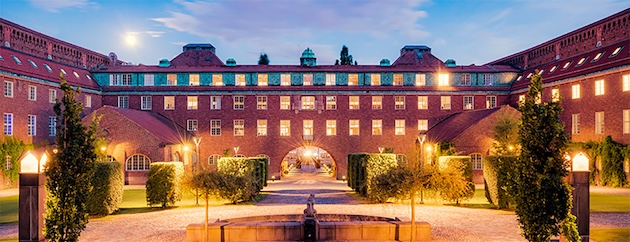
Source: KTH Royal Institute of Technology
Consult GROVE Education for Application Guidance to Europe's Top Universities
With KTH Royal Institute of Technology ranking highly globally and integrating practical and theoretical teaching, it is greatly favoured by international students. If you are planning to study in Sweden, we invite you to consult Grove Education. We will guide you through the popular programmes and tuition details at KTH, as well as help tailor your application materials and interview preparation, assisting you in entering the academic halls of Northern Europe.
References:
1. KTH - Cray Supercomputer at PDC
2. KTH - 2012 Daniel Ek - KTH’s Great Prize
3. KTH - 2015 Sara Mazur - KTH Gold Medal
4. KTH - 2012 Christer Fuglesang - KTH Alumni of the Year
5. QS Top Universities - KTH Royal Institute of Technology
6. Times Higher Education - World University Rankings
7. KTH - Why Choose KTH?
8. KTH - Bachelor Studies
9. KTH - BSc in Information and Communication Technology
10. KTH - Master’s Studies
11. KTH - Master’s in Engineering Mechanics
12. KTH - Master’s in Engineering Materials Science
13. KTH - Master’s in Electric Power Engineering
14. KTH - Master’s in Architecture
15. KTH - Master’s in Civil and Architectural Engineering
16. KTH - Bachelor’s Fees
17. KTH - FAQ About Tuition Fees
18. KTH - Application and Tuition Fees for Master’s Studies
19. University Admissions Sweden - Hong Kong, China - Application Instructions for Bachelor’s Programmes
20. University Admissions Sweden - English Language Requirements
21. KTH - Entry Requirements for Architecture (Master)
22. KTH - Entry Requirements for Computer Science (Master)
23. KTH - Entry Requirements for Engineering Materials Science (Master)
24. KTH - Entry Requirements for Engineering Physics (Master)
25. KTH - Entry Requirements for Master’s Studies
26. University Admissions Sweden - Provide Application Documents for Master’s: Final Year of Bachelor’s Studies
27. KTH - Students from Swedish Universities Applying to Master’s Programmes
28. KTH - Entry Requirements for Master’s Studies
29. KTH - How to Apply for Bachelor’s Studies
30. KTH - How to Apply for Master’s Studies
31. KTH - Time to level up your career? Applications open!