When considering higher education opportunities in the United States, many parents and students frequently mention Harvard University. As a member of the Ivy League, Harvard consistently ranks among the top universities globally, with alumni spread across multinational corporations, research institutes, government, and international organisations. So, what are the admission requirements for Harvard University, and which disciplines are particularly noteworthy? This article by Grove Education will provide an overview of Harvard's popular programmes and application criteria, helping you understand the academic characteristics and admission standards of this world-class institution.
Background and Global Ranking of Harvard University
Founded in 1636 by the Massachusetts Bay Colony, Harvard University is recognised as the oldest institution of higher education in the United States [1]. Today, this nearly 400-year-old university accommodates approximately 24,519 undergraduate and graduate students and boasts over 400,000 alumni, whose influence spans the globe. Furthermore, Harvard's online learning platform has reached over 35 million users, demonstrating the university's academic impact beyond its physical campus and through digital means [2].
Overview of Harvard University Rankings
Harvard University consistently ranks among the world's elite institutions. In the 2026 QS World University Rankings, Harvard is positioned fifth globally, following the Massachusetts Institute of Technology, Imperial College London, Stanford University, and the University of Oxford [3]. Additionally, in the 2026 Times Higher Education (THE) World University Rankings, Harvard also occupies the fifth spot [4]. For 14 consecutive years, it has ranked first in THE's World Reputation Rankings [5], showcasing its unparalleled academic reputation. Furthermore, in the 2025 QS subject rankings, Harvard excelled in various fields, including:
- Arts and Humanities: 1st [6]
- Life Sciences & Medicine: 1st [7]
- Natural Sciences: 1st [8]
- Social Sciences & Management: 1st [9]
- Economics & Econometrics: 1st [10]
- Computer Science & Information Systems: 7th [11]
- Engineering & Technology: 9th [12]
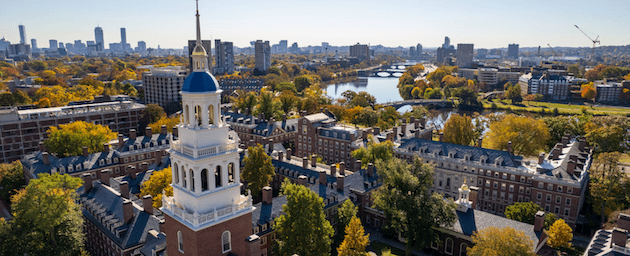
Source: Harvard University
Study Programme Structure at Harvard University
Harvard's educational system centres on a liberal arts and sciences model [13]. Upon admission, students are not immediately assigned to specific majors; rather, during their first year, they engage in a broad array of courses across different disciplines. It is only in their second year (the third semester) that they formally select a concentration. Freshmen do not need to declare a major upon entry; instead, they are encouraged to experience foundational courses covering humanities, social sciences, natural sciences, and engineering before deciding on their academic direction. This system allows for a more informed and experiential approach to selecting a field of study [14].
In essence, when applying to Harvard, students are not required to declare a specific field of study beforehand; they can explore various subjects for the first two semesters and ultimately make a more mature and aligned choice of major in their second year.
Overview of Popular Programmes at Harvard University
Currently, Harvard offers approximately 50 undergraduate concentrations, along with secondary fields and special concentrations for flexible arrangements [15][16]. Notable disciplines at Harvard include:
1. Department of Economics
The Department of Economics at Harvard is globally renowned, not only producing scholars in business and finance but also cultivating critical thinking skills. Students gradually develop their abilities to analyse economic phenomena through applied mathematical modelling and utilise logical reasoning to understand policies, corporate behaviour, social choices, and market operations, making it a popular choice among those interested in business studies [17].
2. Department of Computer Science
As one of Harvard's most sought-after programmes, the Department of Computer Science covers core subjects including mathematics (calculus, linear algebra, probability, and statistics), theoretical computer science, and systems courses. The most notable introductory course, CS50, encompasses algorithm concepts, data structures, software development, and web design fundamentals, serving as a significant starting point for many students entering the field of computer science [18].
3. Department of Government
The Department of Government at Harvard aims to cultivate students who are actively engaged in public affairs. Students have the opportunity to select courses from various areas such as American politics, comparative politics, international relations, political theory, and history, employing empirical research, theoretical construction, and writing training to build strong political analysis skills. Graduates typically pursue careers in government, non-profit organisations, and related fields [19].
4. Biomedical-Related Disciplines (Biomedical Engineering / Neuroscience)
- Biomedical Engineering: This programme focuses on biomaterials, cellular engineering, physiological systems, medical device design, and engineering mathematics. Students engage in engineering design projects collaborating with professors and research teams to develop prototypes or applications in biomedical engineering [20][21].
- Neuroscience: Ranked among the top ten at Harvard, the Neuroscience programme explores areas such as cellular neurobiology, brain signal processing, behavioural science, computational neuroscience, and neurological diseases, allowing students to understand brain mechanisms through an interdisciplinary approach [22].
5. Humanities-Related Disciplines (Philosophy / History)
- Philosophy: Harvard's Philosophy programme emphasises systematic, clear, and rigorous thinking about fundamental human truths, encouraging argumentation and critical reflection while drawing perspectives from economics, literature, religion, law, mathematics, natural sciences, and psychology, to develop interdisciplinary analytical skills [23][24].
- History: This programme encompasses social life, economics, culture, thought, and politics, where students explore these topics at various levels, from individual to community and national scales. They employ methods from the humanities and social sciences to pose questions and analyse historical sources, appealing to students interested in careers in education, public policy, media, and cultural institutions [25][26].
What Are Harvard University's Admission Requirements??
Given that multiple fields within Harvard rank first globally, the competition for admission is extremely rigorous. According to the latest statistics, for the Class of 2029, there were 47,893 applicants, of whom only 2,003 were admitted, resulting in an overall acceptance rate of approximately 4.2% [27].
Further Reading: Understanding University Acceptance Rates: How Are They Calculated?
The university employs a holistic review process, which does not limit the evaluation to a single examination score but considers academic performance (including original writing and research), extracurricular activities, community involvement, and personal character traits. The admissions committee places particular emphasis on how an applicant's background and experiences contribute educationally to their peers. Additionally, teacher recommendations, interview performance, application essays, and other qualitative factors are crucial in assessing an applicant's potential [28].
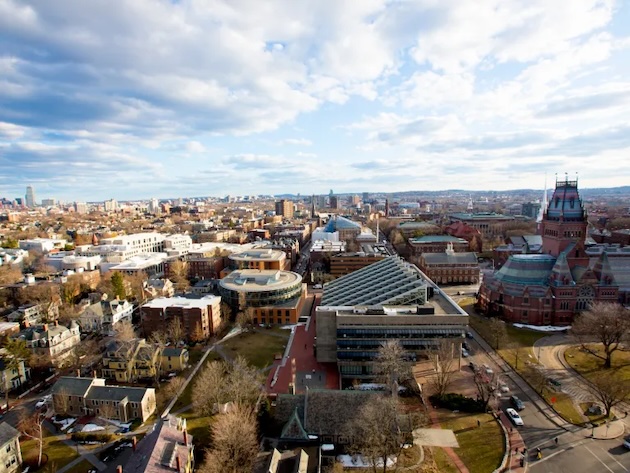
Source: Harvard University
Application Information for Harvard University
The undergraduate application process at Harvard is highly structured and demands strict adherence to documentation requirements. Applicants must submit their application materials via specified channels by designated deadlines, supported by supplementary documents from their schools and recommenders. Below are the admission criteria and application highlights for Harvard University:
1. Eligibility for First-Year Admission
Harvard explicitly defines the eligibility criteria for First-Year Applicants:
Eligible Applicants:
- Students currently attending or having completed high school and intending to pursue their first undergraduate degree.
- Students who have taken college courses during high school (Dual Enrollment or other supplementary courses) are still regarded as first-year applicants, even if they have earned university credits during high school.
Ineligible Applicants:
- Students who have formally enrolled in other colleges or universities. Once a student registers and commences coursework at another higher education institution after graduating high school, they are considered a transfer applicant, even if they wish to forgo their prior credits.
- The first-year admission criteria do not apply to applicants who have obtained a bachelor’s degree; Harvard does not provide an admissions route for a second undergraduate degree.
2. Application Channels and Required Materials
When applying to Harvard, students must initially submit their materials through the Common Application (most students, including international students, use this method) or the Coalition Application (designed for resource-limited students) [29][30]:
- Application Form: This includes problem sets, an activities list, and a personal essay.
- Harvard Supplementary Questions: These consist of five required short essays, with a maximum word count of 150 words for each question.
3. Standardised Test Scores (SAT/ACT)
While the school has not publicly specified admission scores, according to data for the fall 2024 intake, the 75th percentile (top 25% of admitted students) test scores are approximately as follows [31]:
- SAT Evidence-Based Reading & Writing: approximately 780
- SAT Mathematics: approximately 800
- ACT Composite Score: approximately 36
Additionally, if applicants cannot take the SAT/ACT due to exceptional circumstances, they may use AP, IB, UK GCSE/A-Level, or other National Leaving Exam scores as alternatives.
4. High School Documents
Applicants must submit the following documentation related to their secondary education [31]:
Secondary School Report: Submitted by a school counsellor, typically including:
- High school transcript (noting courses and grades from years 9 to 12)
- Counsellor Recommendation: commenting on the student's learning attitude, personal attributes, and growth trajectory.
- School Profile: providing information about course difficulty, school size, and offered AP/IB/Honours courses (if applicable).
Midyear School Report: As many students do not have complete senior year grades at the time of application, Harvard requires this document to be submitted after the conclusion of the first term of the senior year.
Two Teacher Recommendations: To be submitted by teachers from different subjects.
Graduation Report and Final Transcript: Students who are admitted and decide to attend must submit a Final School Report and the final transcript (years 9 to 12).
5. Application Fee
The application fee for Harvard University is $90 (USD), which can be waived based on financial circumstances.
Application Deadlines
Harvard offers two primary application timelines: Restrictive Early Action (REA) and Regular Decision (RD). REA allows students to submit applications earlier and receive admission decisions sooner but comes with certain restrictions on early application; RD provides a more lenient timeline without such limitations, making it suitable for students who prefer more preparation time during their senior year. Key application dates for Harvard University are as follows [29]:
| Item | Restrictive Early Action(REA) | Regular Decision(RD) |
|---|---|---|
| Application System Opening | Common App: 1 August; Coalition: 15 August | Same as REA |
| Application Deadline | 1 November | 1 January |
| Standardised Test Submission Deadline | By end of October; November tests accepted (must be submitted by application deadline) | Ideally by November; December SAT or February ACT scores can be accepted |
| Decision Date | Mid-December | End of March |
| Final Admission Reply Deadline | Before 1 May (no deposit required) | Before 1 May (no deposit required) |

Source: Harvard University
GROVE Education Consultants: Access to America’s Top Academic Institutions
Harvard University, with its over 400-year history, enjoys a stellar reputation in academia worldwide. By delving into an exploration of Harvard's global rankings and popular programmes, one can appreciate the allure of this Ivy League institution. To navigate the competitive application process successfully, it is crucial to understand Harvard's admission requirements and selection criteria to stand out among numerous applicants. If you are considering applying to Harvard University, we invite you to consult the experienced team of educational consultants at Grove Education, who possess extensive experience in applying to top institutions. We tailor personalised study plans based on each student's background and aspirations.
References:
1. Harvard University – The history of Harvard University
2. Harvard University – About Harvard
3. TopUniversities(QS) – QS World University Rankings 2026: Top global universities
4. Times Higher Education – Harvard University | World University Rankings
5. Times Higher Education – World Reputation Rankings 2025: top universities by prestige
6. TopUniversities(QS) – QS World University Rankings by Subject 2025: Arts and Humanities
7. TopUniversities(QS) – QS World University Rankings by Subject 2025: Life Sciences & Medicine
8. TopUniversities(QS) – QS World University Rankings by Subject 2025: Natural Sciences
9. TopUniversities(QS) – QS World University Rankings by Subject 2025: Social Sciences & Management
10. TopUniversities(QS) – QS World University Rankings by Subject 2025: Economics & Econometrics
11. TopUniversities(QS) – QS World University Rankings by Subject 2025: Computer Science and Information Systems
12. TopUniversities(QS) – QS World University Rankings by Subject 2025: Engineering & Technology
13. Harvard College – Liberal Arts & Sciences concentrations
14. Harvard College – Exploring sophomore concentration declaration
15. Harvard College Advising – Concentrations and secondaries
16. Harvard College – Special Concentrations
17. Department of Economics – Concentrator Guide
18. Harvard University Course Catalog – Course Search (example class 152514)
19. Department of Government – Undergraduate
20. Harvard SEAS – Bachelor’s Degrees in Bioengineering
21. Harvard University – Bioengineering
22. Harvard Medical School – Dept. of Molecular & Cellular Biology – Neuroscience team expands to meet growing demand
23. Department of Philosophy – The Concentration
24. Department of Philosophy – Welcome
25. Department of History – Undergraduate Program
26. Department of History – FAQs
27. Harvard College – Admissions Statistics
28. Harvard Gazette – Admissions, beyond a single test
29. Harvard College – First-Year Applicants
30. Harvard College – Application Requirements
31. Harvard University – Office of Institutional Research & Analytics – Common Data Set 2024–2025