The UK has always been a popular choice for Hong Kong students seeking to study abroad. In addition to institutions located in London, the University of Reading, situated just a 25-minute train journey from the capital, has become a top choice for many students. With its beautiful campus and the internationally renowned Henley Business School, the University of Reading offers a compelling academic environment. But what is the reputation of the University of Reading? How does it rank academically? This article will provide you with a detailed analysis of the University of Reading’s global rankings, programmes, and tuition fees, assisting you in your educational planning.
Overview and Reputation of the University of Reading
Founded in 1892, the University of Reading [1] received its Royal Charter in 1926, officially becoming a university [2]. Located in Reading, in the southeast of England, it is only about a 23-minute train ride from Paddington Station in London, offering excellent transport links and earning it the title of “London’s Garden”.
The University of Reading’s main campus, Whiteknights Campus, has received numerous accolades and features extensive green spaces and lakes, providing a comfortable and pleasant learning environment. Furthermore, Reading is one of the few universities in the UK to house a business school — the Henley Business School — that has achieved the prestigious “Triple Crown” accreditation, recognised for its high reputation and robust alumni network within the business sector [3]. Overall, the University of Reading receives high praise from both students and employers in terms of academic resources, campus life, and employment prospects.
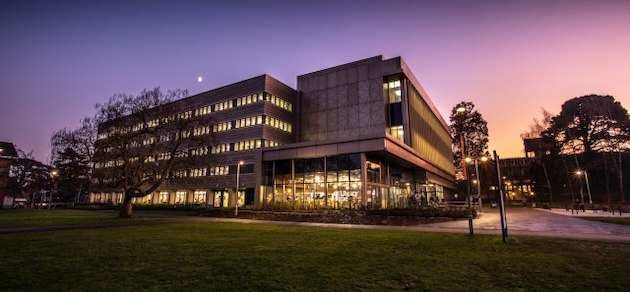
Source: University of Reading
Global Rankings and Academic Performance of the University of Reading
In the latest 2026-2027 QS World University Rankings, the University of Reading is positioned at 196th globally, consistently placing within the top 200 universities worldwide [4]. Additionally, the university represents one of the UK's largest-ever sustainability-focused undergraduate scholarship initiatives. Having been named “University of the Year for Scholarships and Bursaries” by 《The Times & Sunday Times Good University Guide》 for 2026 [5]. These figures reflect a positive reputation for the University of Reading in the international academic community.
In terms of subject rankings, the University of Reading demonstrates strong performance across multiple disciplines. According to the latest QS World University Subject Rankings, its programmes in Agriculture and Forestry are ranked 1st in the UK and among the top 19 globally [6]. The fields of Earth and Marine Sciences [7] and Archaeology also feature prominently, ranking 43rd worldwide [8].
Popular Disciplines at the University of Reading
The University of Reading offers a diverse selection of programmes across business, science, humanities, and social sciences. Its academic structure is robust, with particular strengths in business, environmental sciences, and related fields. Below are some notable subjects and their strengths:
1. Business & Management
As the university’s flagship faculty, Henley Business School is one of the oldest business schools in the UK and boasts the Triple Crown accreditation (AACSB, AMBA, and EQUIS), awarded to only about 1% of business schools globally. Its courses in Accounting, Finance, and Business Management are highly regarded, leading to excellent graduate employment rates. In the 2026 Complete University Guide, its Land and Property Management subject ranks 1st in the UK [9].
2. Real Estate & Planning
Part of Henley Business School, the Real Estate programme at the University of Reading is recognised as one of the best in the UK. This course is accredited by the Royal Institution of Chartered Surveyors (RICS) and has a strong industry alumni network, providing excellent career prospects in the fields of surveying and real estate [10]. Notable subjects include:
3. Meteorology
The University of Reading hosts one of the world’s leading departments of Meteorology, a hub for meteorological research. Many graduates find employment with the UK Met Office or international climate organisations [11]. Its Earth and Marine Sciences also rank among the top 50 globally in the QS subject rankings. Key subjects include:
4. Agriculture & Food Science
As a pioneer in agricultural education in the UK, the Agriculture and Forestry programme is ranked 1st in the UK and within the top 20 globally in the 2026 QS subject rankings. The course is closely aligned with the food industry, combining cutting-edge research with practical application. Key subjects include:
Students are advised to consider whether their chosen course offers a Placement Year, as this can significantly enhance employability upon graduation.
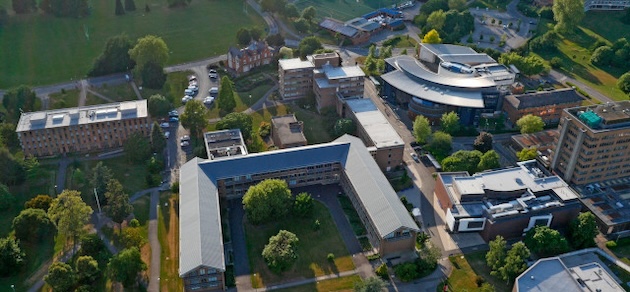
Source: University of Reading
Tuition Fees and Living Costs at the University of Reading
Budgeting for studying abroad is a crucial part of educational planning. For international students commencing their studies in the 2025/26 and 2026/27 academic years, tuition fees at the University of Reading vary depending on the nature of the programme (whether it involves laboratory work) [12]:
- Non-laboratory Courses (Band 1): Such as Humanities, Business, and Law.
- 2025/26 Tuition: Approximately £25,250
- 2026/27 Tuition: Approximately £25,850
- Laboratory/Workshop Courses (Band 2): Such as Science, Engineering, and Arts Design.
- 2025/26 Tuition: Approximately £29,950
- 2026/27 Tuition: Approximately £30,650
- Foundation Year: Initial tuition fees range from approximately £22,500 (25/26) to £23,000 (26/27).
Regarding living costs, the cost of living in Reading is slightly lower than in London, although it is still reflective of the southeast of England. Annual living expenses (including accommodation, food, and transport) are estimated to be between £12,000 and £16,000. Actual expenditures will depend on the type of accommodation chosen and individual spending habits [13].
Admission Criteria and Requirements for the University of Reading
To secure admission successfully, students must demonstrate strong academic performance. Given the competitive nature of the programmes at the University of Reading, applicants should be aware of the following entry requirements:
Public Examination Results
Hong Kong students may apply directly for undergraduate courses using the Hong Kong Diploma of Secondary Education (HKDSE):
- HKDSE Scores: Generally, candidates must achieve grades of 4, 4, 4 to 5, 5, 4 in three elective subjects (excluding Liberal Studies/Civics). Some competitive disciplines (such as Quantitative Finance and Law) may require higher scores [14].
- Specific Subjects: Certain STEM programmes may require mathematics or physics to meet specified levels.
- Other Qualifications: A-Level requirements typically range from BBB to AAA; IB total scores usually necessitate a score between 30 and 34 [15].
English Language Proficiency Requirements
The high reputation of the University of Reading attracts students from around the globe, and English proficiency is required of all international students, with specific requirements depending on the course [16]:
| English Test | Arts and Humanities Courses | Business, Sciences, and Law Courses |
|---|---|---|
| IELTS (Academic) | Overall 7.0 (minimum 6.0 in any component) | Overall 6.5 |
| HKDSE English | Level 5* | Level 4 |
Application Process and Documentation
Prospective applicants must submit their applications through UCAS (the UK University Admissions System), including the following documentation [17]:
- Personal Statement: This should clearly articulate your motivation for applying and your passion for the chosen programme at the University of Reading.
- Academic Transcripts: These should include high school and DSE results.
- References: Written by school teachers.
- Proof of English Language Proficiency: Such as IELTS score reports.
The primary UCAS deadline is typically at the middle of January in the year of admission, so students are advised to prepare their applications well in advance.
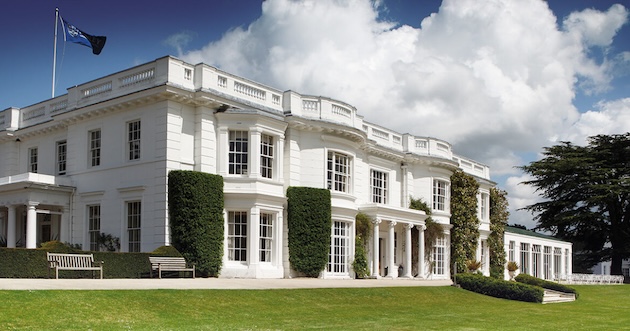
Source: University of Reading
Grove Education: Your Guide to Studying in the UK
With a stable global ranking and excellent evaluations in business and science disciplines, the University of Reading is undeniably a prime choice for studying in the UK. If you have any questions regarding the tuition budget or specific programmes at the University of Reading, please feel free to contact Grove Education. Our professional education consultants offer personalised guidance and can assist you in successfully gaining admission to this esteemed institution.
References:
1. University of Reading - Our History
2. University of Reading - Royal Charter
3. Henley Business School - Accreditations
4. University of Reading - QS World University Rankings 2026-2027
5. University of Reading - Reading named University of the Year for Scholarships 2026
6. QS Top Universities - QS World University Rankings by Subject 2026: Agriculture & Forestry
7. QS Top Universities - QS World University Rankings by Subject 2026: Earth & Marine Sciences
8. QS Top Universities - BSc Meteorology and Climate
9. Henley Business School - Undergraduate rankings
10. University of Reading - Real Estate and Planning
11. University of Reading - Department of Meteorology
12. University of Reading - Fees for international students Undergraduate
13. University of Reading - Living costs
14. University of Reading - Information for students from Hong Kong (SAR-PRC)
15. University of Reading - Equivalent qualifications
16. University of Reading - English language requirements
17. University of Reading - Undergraduate application information