As a prominent institution ranked among the best globally, Duke University is celebrated for its exceptional academic calibre and diverse programme offerings. It boasts an impressive international reputation and has nurtured many outstanding individuals, including Tim Cook, the current CEO of Apple [1]. This article, provided by Grove Education, explores Duke University's popular programmes and application methods, enabling you to commence your study planning in the United States.
Is Duke University a Good Choice? An Overview of the Institution
Duke University has a rich and storied history, originating in 1838 as a small school named "Union Institute Academy" in Randolph County, North Carolina, and was renamed Duke University in 1924 [2]. The university is situated in Durham, North Carolina, just 15 kilometres from Durham International Airport (RDU), providing convenient access.
How does Duke University perform overall? The institution excels in resources and academic programmes. For instance, the Duke University School of Medicine and the Department of Computer Science collaborate to offer training courses focusing on AI-accelerated medical research [3]. Moreover, Duke has achieved notable success in the fields of public policy and global health. In the 2024-2025 academic year, it received 204 research grants from external organisations and participated in public health and health collaboration activities in 49 countries [4]. These distinctive programmes not only highlight Duke's esteemed research reputation but also underscore its leading academic status across various fields.
World Rankings of Duke University
In the QS World University Rankings, Duke University is positioned at 62nd globally [5], with its Department of Anatomy and Physiology and the Department of Theology and Religious Studies achieving 5th place each [6][7]. The Nursing Programme ranks 7th [8], while the Medicine Programme is ranked 16th [9], and Biological Sciences is positioned at 32nd [10]. Conversely, in the Times Higher Education World University Rankings for 2026, Duke University is ranked 28th globally and 17th in the United States [11]. Notably, its Business and Economics programme stands out at 15th; the Law, Life Sciences, and Medical & Health programmes are all ranked 23rd, with Social Sciences at 33rd and Arts and Humanities at 36th [12]. These rankings demonstrate Duke's premier status in healthcare, business, law, and the humanities and social sciences, reflecting its dual strength in research and teaching as a world-class university.

Source: Duke University
Overview of Academic Programmes at Duke University
Duke University’s undergraduate programmes are primarily housed within its Trinity College of Arts & Sciences and the Pratt School of Engineering. Below is an overview of the disciplines offered by these two colleges: :
Trinity College of Arts & Sciences
Trinity College offers 48 majors, 50 minors, and 23 interdisciplinary certificates, with approximately 80% of undergraduates studying within this college. Students have the freedom to customise their majors within a flexible curriculum structure. Furthermore, Trinity College offers over 5,000 undergraduate courses each semester, alongside 18 FOCUS clusters and 22 House Courses, enhancing students' interdisciplinary learning capabilities [13]. According to data from the 2024 academic year, popular majors at Trinity College include Computer Science, Economics, Biology, Public Policy, and Psychology [14].
Pratt School of Engineering
The Pratt School of Engineering provides a wide variety of majors and minors, allowing students to explore various engineering fields in depth. The primary programmes offered include [15]:
- Biomedical Engineering: This discipline focuses on medical technology design and tissue engineering, with opportunities for students to pursue dual majors in conjunction with civil, environmental, electrical, computer, and mechanical engineering.
- Civil Engineering: Concentrating on sustainability, research areas include structural engineering and water resource management, with an option for a dual major with Biomedical Engineering.
- Electrical and Computer Engineering: This area integrates computing with electronic technology, covering subjects like digital systems, solid-state devices, and integrated circuits, alongside minors in artificial intelligence, machine learning, and software engineering.
- Environmental Engineering: This programme develops systems aimed at protecting Earth's air, water, and soil, with research areas focusing on water resource engineering, biotechnology, and bioremediation, offering a dual major option with Biomedical Engineering.
- Mechanical Engineering: This discipline centres on the invention and design of mechanical devices, applicable in areas such as healthcare, manufacturing, energy, and transportation, with an option for dual majoring with Biomedical Engineering.
- Interdisciplinary Option: IDEAS: Through the IDEAS programme, students can design personalised interdisciplinary majors according to their interests.
Minors
The Engineering School also offers four minor programmes:
- Machine Learning & AI: This course concentrates on machine learning and deep learning techniques, suitable for students interested in developing AI technologies.
- Electrical and Computer Engineering (ECE): This programme provides foundational knowledge of electrical and computer systems, covering digital systems and microelectronics, ideal for students with an interest in hardware and software technologies.
- Software Engineering: This area focuses on the software development process, including design, testing, and maintenance.
- Energy Engineering: This field explores energy generation, conversion, and storage technologies with an emphasis on renewable energy solutions and environmental protection.
Moreover, all engineering majors at Duke are accredited by the Accreditation Board for Engineering and Technology (ABET). Students are encouraged to explore various interdisciplinary options when selecting their majors, fostering personal growth and cultivating globally minded, innovative individuals through an integrated and personalised learning approach.

Source: Duke University
Admissions Process at Duke University
Due to its prestigious global ranking, Duke University attracts a high number of applicants, leading to strict admissions standards. In addition to academic performance, the university places significant emphasis on extracurricular involvement, recommendation letters, and the completeness of personal statements. Applicants may utilise the Common Application or, if eligible, the QuestBridge Application, submitting all required materials in accordance with university guidelines. The two main application methods available are:
- Common Application: General applicants, including international students, submit their applications via the Common App, choosing between Early Decision or Regular Decision based on their preference.
- QuestBridge Application: This application is designed for academically high-achieving students with financial need, primarily targeting high school students within the United States or those with American citizenship [16]. Successful participants in the National College Match receive binding admission and are awarded four years of full funding covering tuition, housing, and meals [17].
Application Documentation and Academic Background Requirements
Given the diversity of Duke's programmes and the varied backgrounds of its applicants, the university employs a holistic review process to assess application materials, considering academic performance, personal interests, achievements, unique experiences, and perspectives. Consequently, the following materials are required [18]:
Coursework Requirements
Duke University expects students to have a solid academic foundation prior to admission due to the competitive nature and difficulty of its courses. The specific requirements are as follows:
1. Recommended Coursework:
- English: 4 years
- Mathematics, Natural Sciences, Foreign Languages, and Social Sciences: At least 3 years in each subject
- Five academic courses each year; if a subject has not been completed for 4 years, a replacement course of equivalent difficulty should be taken.
2. Special Requirements for the Pratt School of Engineering:
- Students applying to the Pratt School must have completed calculus and are strongly advised to take physics.
3. Advanced Coursework Recommendations
- Duke University encourages all students to undertake advanced courses, regardless of planned major. AP (Advanced Placement) or IB (International Baccalaureate) courses can provide a solid foundation for university learning.
Transcript Requirements
Due to the holistic review process, Duke evaluates applicants' academic histories and performance based on the following factors:
- Coursework: Assessment of the content and difficulty of undertaken courses
- Grades: Specific performance in each subject
- Cumulative GPA: Overall academic average
- Class Ranking: If available, class ranking will also be taken into consideration.
Additionally, applicants should take note of the following points:
- Students applying for Early Decision must have their school counsellor submit first-quarter grades for 12th grade with the Common Application. If this is not possible, an unofficial progress report should be provided.
- All applicants must submit their mid-year grades via the Common Application by February 15, or as soon as they are available.
- Final admitted students must have their final transcript submitted by their school counsellor.
- International students' transcripts must be presented in English, and translated documents must be submitted alongside the originals.
Standardised Test Scores
For the 2025 to 2026 academic cycle, Duke University has adopted a Test-Optional policy. Students may choose whether or not to submit SAT or ACT scores as part of their application. Applicants who do not submit their scores will not be disadvantaged; Duke will evaluate applications based on the entirety of the materials submitted (including academic performance, extracurricular activities, recommendation letters, etc.). If applicants choose to submit SAT/ACT scores, the following guidance is recommended:
- Submit ACT Science Scores: Duke advises the submission of the Science section score, particularly for students applying in STEM fields.
- ACT Superscore: Duke continues to employ the ACT Superscore method, allowing students to combine their best scores from different test dates, including the Science section score in the overall calculation.
Applicants may also opt to submit their AP or IB scores, which will be considered in the evaluation but are not mandatory. Choosing not to submit SAT or ACT scores will not adversely affect any AP or IB scores provided.
Proof of English Proficiency
As the majority of programmes at Duke are conducted in English, applicants for whom English is not the native language are encouraged (though not required) to provide English proficiency test scores. If scores are submitted, they will be evaluated based on the highest results. Accepted test types and minimum score requirements include:
- Cambridge C1 Advanced or C2 Proficiency: Minimum score of 180
- Duolingo: Minimum score of 130
- IELTS: Minimum score of 7.0
- PTE Academic: Minimum score of 70
- TOEFL (including TOEFL Home Edition):
- Online TOEFL: Minimum score of 100
- Revised TOEFL: Minimum score of 75
Recommendation Letters and Extracurricular Activity Documentation
When applying to Duke University, students must submit three recommendation letters, including:
- One from a school counsellor
- Two from subject teachers; these must be from core subjects such as English, Mathematics, Social Sciences, Natural Sciences, or Foreign Languages, and should come from courses taken within the last two years.
For applicants to the Pratt School of Engineering, at least one recommendation must come from a mathematics or science teacher. Recommendations should be submitted through the Common Application, though letters sent via email, fax, or post are also accepted.
Given Duke's outstanding performance in world rankings, the university places great emphasis on a balanced development in extracurricular activities. Applicants must provide a record of extracurricular engagements (up to 10 activities) encompassing experiences from school, community, family, and work settings.
Short - Essay Prompts
When applying via the Common Application, applicants must submit one personal essay, not exceeding one page in length. Additionally, for the 2025 to 2026 admissions cycle, applicants must write another short essay specifically required by Duke University, with a word limit of 250 words.
Application Fee
When submitting the Common Application, applicants are required to pay an application fee of $85 (fee waivers can be requested based on financial circumstances).
Interview Guidelines at Duke University
The interview process at Duke is as follows:
Alumni Interviews
Duke University offers optional alumni interviews, typically lasting between 30 to 60 minutes. Not all applicants will be scheduled for an interview, as each year, the university attracts a high volume of applicants. Interviews are prioritised for those from whom the university seeks additional information. Not being scheduled for an interview does not negatively affect admission chances.
GLIMPSE Video:
Applicants have the option to record a GLIMPSE video (60 to 90 seconds) to provide Duke with insights into their personal background. It is important to note that the GLIMPSE video option is only available to students attending high school in the United States.
InitialView Interviews (for International Students) :
International students may opt to interview through InitialView. Applicants can schedule their interviews in advance via the InitialView website to ensure timely arrangements.
| Application Type | Early Decision | Regular Decision |
|---|---|---|
| Common Application Start Date | Early August | Early August |
| Application Materials Submission Date (The application materials include semester transcripts, SAT/ACT scores, reference letters, and other relevant documents.) | November 3 | January 5 |
| Additional Financial Aid Application (if needed) | November 15 | February 1 |
| Midyear Grade Report or First Semester Grades | - | February 15 |
| Admission Decisions Notification | Mid-December | Late March to Early April |
Tuition and Living Expenses
Many students and parents consider tuition and living expenses as significant factors when exploring the viability of attending Duke University. As a top-tier institution ranked among the world's best, its tuition structure reflects the high quality of education and comprehensive campus facilities. Whether for in-state or out-of-state students, attending Duke University signifies entering an academically rich environment with a robust alumni network.
Tuition and Fees for 2025-2026
The following outlines Duke University's basic tuition and miscellaneous fees for 2025-2026 [20]:
| Item | Cost per Semester (USD) |
|---|---|
| Tuition (Trinity College and Pratt School of Engineering) | $35,132.50 |
| New Student Registration Fee (first-time freshmen only) | $180.00 |
| Student Activity Fee | $160.50 |
| Student Services Fee | $406.50 |
| Recreation Fee | $194.50 |
| Health Insurance Fee | $503.50 |
| Student Insurance (Autumn Semester Only) | $3,751.56 |
| Mailbox Rental Fee | $41.00 |
| Engineering Government Fee | $30.00 |
Dining Costs
In addition to its basic tuition fees, Duke University provides a dining plan that includes eight options, ranging from Plan A to Plan J, designed to meet individual needs depending on accommodation status, dining preferences, and lifestyle. The details of each plan are as follows [21]:
- Food Fee: This fee is a fixed amount that applies to all dining plans, primarily allocated for additional dining services on campus.
- Plan A: The most affordable option, suitable for students who do not require many meals.
- Plans B/C/D/E: These plans increase incrementally in price, offering more meal options and greater flexibility, ideal for frequent diners.
- Plan F (Commuter Students): Applicable to students living off-campus, offering fewer meals at a lower price, allowing for more economical choices.
- Plan I (Freshmen Only): Specifically designed for freshmen, providing more meal allocations to assist in their transition to university life with a greater variety of dining options available on campus.
- Plan J (Swift Ave Apartments): Tailored for students residing in Swift Ave Apartments, offering fewer meals for those who frequently cook or dine out.
Additional Estimated Costs
| Item | Cost per Semester |
|---|---|
| Books, Course Materials, Supplies, and Equipment | $268.00 |
| Miscellaneous Personal Expenses* | $1,637.00 |
| Transportation Costs (mainly domestic, varies by residence) | $291.00 - $659.00 |
*Note: Miscellaneous personal expenses include laundry, clothing, snacks, and personal care items.
The aforementioned costs include tuition and essential expenses for the autumn and spring semesters only; additional costs may arise, such as course fees for sports and music, library fines, parking violations, etc.
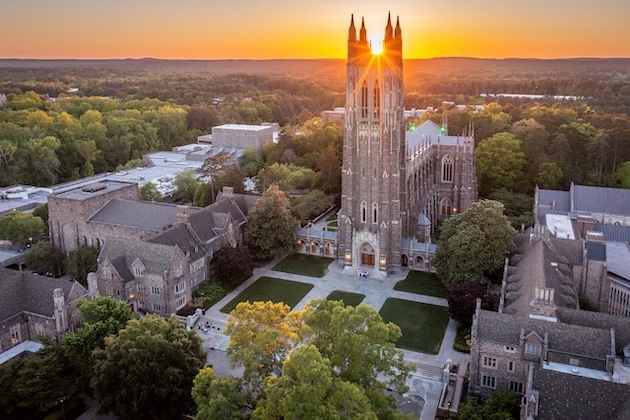
Source: Duke University
Entrust Your Journey to a Leading American University to Grove Education
Is Duke University a good choice? In summary, Duke University is a globally renowned institution with an exceptional academic reputation, offering a diverse range of disciplines and rich interdisciplinary learning opportunities. By understanding Duke’s world rankings, programme offerings, curricula, and practical experiences in various academic fields, one can appreciate the allure of this esteemed university. For those wishing to apply to this renowned American institution, Grove Education offers comprehensive study consultancy services, helping you plan the most suitable academic path towards a successful future.
References:
1. Apple - Tim Cook
2. Duke University - Narrative History of Duke University Archives
3. Duke University - Duke’s Chen Institute to Host Boot Camp on AI-Accelerated Medical Research
4. Duke University - Global Health Institute
5. QS Top Universities - Duke University
6. QS Top Universities - Anatomy & Physiology - University Subject Rankings
7. QS Top Universities - Theology, Divinity & Religious Studies - University Subject Rankings
8. QS Top Universities - Nursing - University Subject Rankings
9. QS Top Universities - Medicine - University Subject Rankings
10. QS Top Universities - Biological Sciences - University Subject Rankings
11. Times Higher Education - Best Universities in the United States
12. Times Higher Education - Duke University World University Ranking
13. Duke University Admissions - Trinity College
14. Duke University - Facts
15. Duke University Pratt School of Engineering - Undergraduate Majors & Minors
16. QuestBridge - National College Match: Apply
17. QuestBridge - National College Match
18. Duke University Admissions - How to Apply
19. Duke University Admissions - Application Checklist
20. Duke University - Tuition Fees
21. Duke University Students - Dining Plans & Points