When considering higher education in Europe, alongside traditional hotspots like the UK, US, and Canada, Southern Europe’s Italy has recently emerged as a premier destination for elite students from Hong Kong. As the birthplace of the Renaissance, Italy not only leads the world in fashion, industrial design, and architecture, but also boasts world-class academic achievements in business, engineering, and medicine. Today, Italian institutions offer a vast array of Master's degrees taught entirely in English, with qualifications fully recognised by the European Union and global employers. If you are planning to pursue postgraduate studies there, this comprehensive guide covers everything from recommended universities and tuition structures to the core administrative steps required to submit a successful application.
Why Choose Italy for Your Master’s Degree?
Italy is an exceptional choice for Hong Kong students seeking a highly respected European degree at a relatively reasonable cost. Italian universities hold pronounced global advantages in design, fashion, architecture, engineering, and business, with an increasing number of English-medium programmes making the transition highly accessible for international applicants.
- Academic Value and Credit Mapping: The Italian higher education system has a long pedigree and is fully integrated with the European Credit Transfer and Accumulation System (ECTS). Most Master's programmes are two-year tracks requiring the completion of 120 ECTS credits, balancing rigorous theoretical instruction with hands-on corporate application [1].
- Tuition and Financial Relief: Compared to capital-intensive destinations like the UK or US, tuition fees at Italian public universities are remarkably modest. Furthermore, public institutions adjust their fee tiers based on family income, merit-based scholarships, or specific waiver mechanisms, offering immense financial flexibility.
- Industry Integration and Employability: Italy’s flagship courses in design, architecture, fine arts, fashion, and advanced engineering are developed in direct coordination with local industrial clusters. This offers students high practical value through portfolio building, professional placements, and elite industry networking.
- Flexible Entry Portals: The application system offers high flexibility, with requirements adapted to individual course demands. The abundance of English-medium pathways allows applicants to select the entry stream that best showcases their specific academic background.
- An Inspiring Cultural Experience: The appeal of studying in Italy extends far beyond the lecture theatre. Its historic urban landscapes seamlessly integrate ancient art with modern daily life, providing a profoundly inspiring environment for students in creative, architectural, or historical disciplines.
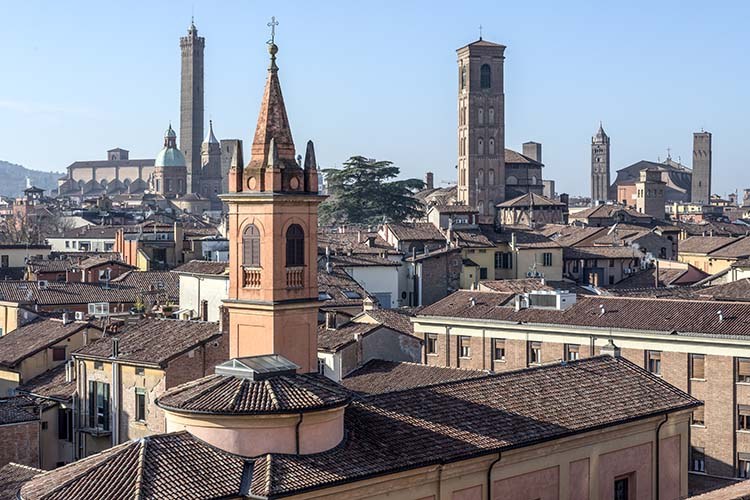
Source: University of Bologna
Top-Tier Italian Universities and Flagship Disciplines
When mapping out an international education plan, selecting the right institution is vital for your long-term career trajectory. Italy’s academic infrastructure is both rigorous and diverse; students should clarify their professional goals to target the most appropriate tier.
Politecnico di Milano —— A Titan of Engineering and Design
If you intend to pursue a career in architecture, industrial product design, or advanced engineering, the Polytechnic University of Milan (Politecnico di Milano, or PoliMi) is an undisputed premier choice. The institution is ranked 6th globally for Architecture & Built Environment [2]. As an elite technical institute, its English-medium Master of Science programmes enjoy immense international prestige. PoliMi maintains close ties with premier global fashion houses and technology giants, offering students a powerful corporate platform.
University of Bologna —— The Vanguard of Humanities, Business, and Law
As the oldest university in the Western world, the University of Bologna commands immense international academic authority in law, economics, and the social sciences. Multiple disciplines within these faculties are ranked number one nationally in Italy in the QS World University Rankings by Subject [3]. To accommodate international recruitment, the university has rapidly expanded its English-medium portfolio, offering cutting-edge Master's tracks in business management and cultural innovation—making it a top consideration for students seeking traditional academic prestige.
Sapienza University of Rome —— A Leader in Classical Studies and Medicine
Sapienza University of Rome stands as one of Europe’s largest and most historic institutions, with its Classics, Archaeology, and Life Sciences disciplines consistently placing within the top tier globally. According to its latest international admissions data, Sapienza offers nearly 60 English-taught Master's degrees for the 2026/27 academic year [4]. This represents an exceptionally cost-effective pathway for Hong Kong scholars targeting advanced research in classical arts, scientific engineering, or modern medicine.
Elite Private Fashion and Design Academies
If your career goal is explicitly focused on luxury brand management, haute couture, or the upper echelons of the global fashion industry, premier private institutions such as Istituto Marangoni [5] or Domus Academy [6] are the ideal choices. These specialized schools maintain peerless corporate networks and exclusive brand placement resources, serving as highly competitive incubation centers for creative talent.
Tuition Fees Structure and Cost of Living Forecast
Accurate financial forecasting is a fundamental step in planning your study abroad journey. Italy's higher education system operates on a highly flexible capital model, with public and private institutions differing fundamentally in their fee structures:
Public vs Private Institutional Fees [7]
- Public Universities: Strictly speaking, Italian public universities do not charge standard tuition fees, but rather a mandatory annual registration contribution. For non-EU international students, this baseline generally ranges between €900 and €4,000 per annum (approx. HK $8,200 – HK$ 36,440). Crucially, upon securing an offer, international students can submit an ISEE Parificato (Overseas Income Evaluation Certificate). If your family income falls within the lower-to-middle income brackets, you can qualify for substantial fee waivers or complete exemptions [8].
- Private Academies & Business Schools: Operating independently of government subsidies, private fees are higher, generally ranging from €6,000 to over €20,000 per annum (approx. HK $54,660 – HK$ 182,200+) [7]. However, these schools standardly offer competitive Early Bird Discounts—granting a 10% to 20% tuition reduction for candidates who finalize registration during initial application rounds.
Estimated Cost of Living and Student Accommodation [8]
Compared to the UK and northern Europe, Italy remains remarkably affordable. The average monthly outgoings for an international student—encompassing housing, groceries, urban transit, and mandatory health insurance—range between €700 and €1,200 (approx. HK$6,370 – HK$ 10,920):
- Primary Tier-1 Cities (Milan, Rome): Driven by competitive housing demands, a single room in a shared apartment or student hall typically ranges from €350 to €800 per month (approx. HK $2,980 – HK$ 6,800). A realistic total monthly budget in these metropolitan centers should be maintained between €900 and €1,500 (approx. HK $7,650 – HK$ 12,750).
- Secondary Tier-2 University Towns (Turin, Bologna): Offering a more relaxed pace of life, student accommodation or shared flats are significantly cheaper, falling between €250 and €600 per month (approx. HK $2,130 – HK$ 5,100). The total monthly budget here averages comfortably between €800 and €1,200 (approx. HK $6,800 – HK$ 10,200).
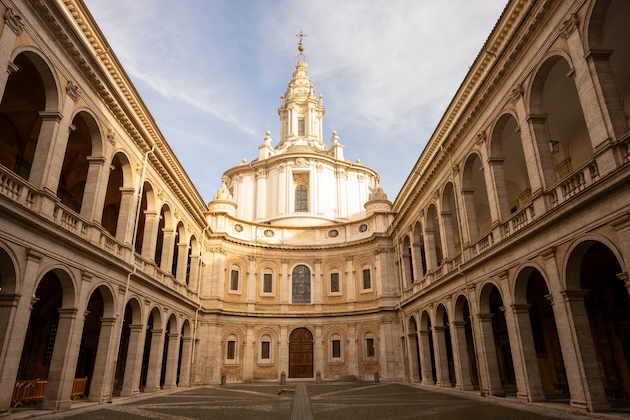
Source: Sapienza University of Rome
Admission Requirements and Application Process
To secure a formal admission offer, applicants from Hong Kong must satisfy explicit academic, linguistic, and portfolio evaluation criteria.
Master’s Programme Portfolio Checklist [9]
Identification & Forms: A valid copy of your passport (ensuring the expiration date extends well beyond your study duration); a professional passport-style photograph with a white background; and the completed institutional application form.
Academic Background & Credit Auditing: A certified copy of your undergraduate Bachelor’s degree scroll and official academic transcripts. The central admissions board will execute a strict credit-mapping review to verify that the credit hours and specific modules completed during your undergraduate degree perfectly align with the prerequisites of your target Master’s faculty.
Standardised Entrance Tests: Specific technical or medical tracks require standardised test results; for instance, applicants targeting international English-medium medicine degrees must sit the mandatory IMAT (International Medical Admissions Test).
Language Proficiency Qualifications:
- English-Taught Tracks: Typically requires a minimum IELTS Academic overall band of 5.5 to 6.0 (with competitive business or top-tier faculties demanding a 6.5 or above) or a TOEFL iBT score of 80+.
- Italian-Taught Tracks: Applicants must present a certified CILS or CELI certification matching a CEFR B2 level or above.
Qualitative Documentation: An updated personal CV/Resume detailing your academic achievements and professional placement history; one or two formal Letters of Recommendation drafted in English by undergraduate professors or corporate line managers; and a tailored Statement of Purpose (Letter of Motivation) detailing your research path and long-term career goals.
Creative Design Portfolios: Mandatory exclusively for candidates targeting Architecture, Fashion, Product Design, or Fine Arts at institutions like PoliMi, Istituto Marangoni, or Domus Academy. The portfolio serves as the primary device for the review board to evaluate your creative philosophy and technical execution.
The Application and Enrolment Timeline
Postgraduate admissions are managed via a series of sequential review rounds. Prospective international students should align their schedules with the following framework [10]:
- November – February: Round 1 Application Window. Critical Advisory: Hong Kong students are strongly urged to submit their completed portfolios during this opening phase, as this is when the allocation of full tuition waivers and merit-based institutional scholarships is highest.
- March – May: Admissions review boards progressively communicate formal offers or waiting list allocations.
- May – July: Upon receiving an offer, successful candidates must log onto the official Universitaly portal to submit their formal Pre-enrolment application. This step is a strict statutory prerequisite mandated by the Italian Ministry of Education before a student visa can be cleared.
- September: Present your certified pre-enrolment documents, proof of funds, and medical cover to the Consulate General of Italy in Hong Kong to process your Long-Stay Student Visa, whilst finalizing your student housing and flight bookings. Detailed visa document guidelines are managed via the official Visto per l'Italia gateway of the Italian Ministry of Foreign Affairs.

Source: Shutterstock
Secure Your Academic Success in Italy with Grove Education
Pursuing your higher education in continental Europe is a transformative career investment. From identifying the premier university that matches your specific trajectory and passing strict ECTS credit-mapping checks to navigating the Universitaly portal and securing an income-based fee exemption, every administrative detail demands absolute precision. Relying on generic templates can compromise your file.
If you have questions regarding university choices, the ISEE Parificato evaluation framework, or Italian student visa processing, contact the consultancy team at Grove Education. Backed by years of experience in managing admissions for elite European public and private institutions, our professional advisors provide a bespoke service. From precision profile auditing and certified translation coordination to personal statement polishing and portfolio advice, we ensure your application is optimized for complete success.
Contact Grove Education today to launch your international future in Europe.
References
1. European Commission - European Credit Transfer and Accumulation System (ECTS)
2. Politecnico di Milano - Our figures
3. University of Bologna - QS World University Rankings by Subject: the university’s positioning and the methodology
4. Sapienza University of Rome - International Admissions
5. Istituto Marangoni - Postgraduate Master Courses
6. Domus Academy - Masters & Master of Arts Programmes
7. European Commission - Study in Italy: Higher education institutions, costs and applying
8. University Living - Cost of Living in Italy for International Students
9. Mastersportal - Study in Italy: Master's Guide