Here are the key things to know before applying to the University of Groningen for 2027 entry:
- QS World Ranking: The University of Groningen is ranked 157th globally in the QS World University Rankings 2027
- THE World Ranking: Ranked 87th globally in the Times Higher Education World University Rankings 2027
- Popular Courses: International Business, Psychology, Artificial Intelligence, Economics, Computing Science, Astronomy and more
- English Language Requirements: Applicants to English-taught bachelor's degree programmes generally need to provide IELTS, TOEFL or another recognised English language qualification. Required scores and exemptions vary by programme
- Tuition Fees: Fees differ for EU/EEA and non-EU/EEA students. Hong Kong applicants should check the international tuition fees for their chosen programme for the 2027–28 academic year
- Application Process: Applicants generally register through Studielink and submit supporting documents via the University of Groningen's Progress Portal. Some programmes with limited places have earlier application deadlines
Planning to study business, psychology, artificial intelligence or natural sciences in the Netherlands? The University of Groningen (Rijksuniversiteit Groningen) is one of the Netherlands' longest-established research universities. Founded in 1614 and located in the northern Dutch city of Groningen, the university offers a wide range of undergraduate and postgraduate programmes. It is ranked 157th globally in the QS World University Rankings 2027 and 87th in the Times Higher Education World University Rankings 2027.
This guide covers everything you need to know about applying to the University of Groningen for 2027 entry, including its QS and THE rankings, popular degree programmes, tuition fees, IB, A-Level and HKDSE entry requirements, IELTS and TOEFL requirements, application procedures and important deadlines. It is designed to help Hong Kong students prepare for studying in the Netherlands.
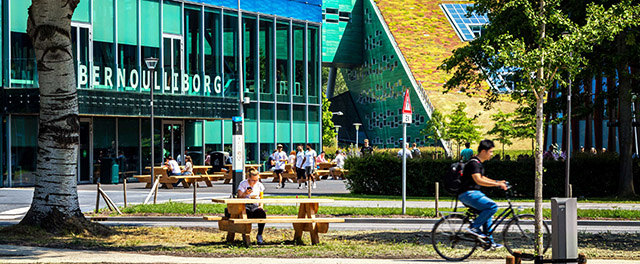
Source: University of Groningen
About the University of Groningen
The University of Groningen (Rijksuniversiteit Groningen, abbreviated as UG) was founded in 1614 and is one of the oldest research universities in the Netherlands, with more than 400 years of academic history. Located in Groningen in the northern Netherlands, the university is known for its research strengths, international learning environment and broad selection of academic disciplines, attracting students from around the world.
The university comprises several faculties, including Economics and Business, Behavioural and Social Sciences, Law, Arts, Philosophy, and Science and Engineering. It offers bachelor's, master's and doctoral programmes across a wide range of fields. With a strong focus on interdisciplinary research and international collaboration, the university provides numerous English-taught degree programmes, making higher education in the Netherlands accessible to international students who do not speak Dutch.
Groningen is also a lively university city with an active student community, an extensive cycling network and a multicultural environment. Compared with some of Europe's larger cities, Groningen offers a relatively relaxed pace of life, making it an attractive option for Hong Kong students seeking both academic development and an international student experience. However, student accommodation can be difficult to secure in the Netherlands, so applicants are advised to begin exploring housing options as early as possible.
University of Groningen 2027 QS and THE World Rankings
University rankings are an important consideration for many Hong Kong students planning to study abroad. The University of Groningen has maintained a strong position in international university rankings and is recognised for its research activities across fields such as psychology, business, social sciences and natural sciences.
According to the QS World University Rankings 2027, the University of Groningen is ranked 157th globally, compared with joint 147th in 2026. Meanwhile, the university is ranked 87th in the Times Higher Education (THE) World University Rankings 2027, placing it among the world's top 100 universities in that ranking.
It is important to note that QS and THE use different assessment methodologies, covering factors such as academic reputation, research performance, international outlook and teaching environment. As a result, a university's position can vary between ranking systems.
Students considering the University of Groningen should therefore look beyond its overall ranking and compare individual degree programmes, research strengths and entry requirements to determine whether the university aligns with their academic interests and future career plans.
Popular Courses and Strongest Subjects at the University of Groningen
The University of Groningen offers a broad range of undergraduate and postgraduate programmes across business, psychology, artificial intelligence, natural sciences and social sciences.
For Hong Kong students interested in studying an English-taught degree in the Netherlands, the following programmes are worth considering.
International Business
International Business is one of the University of Groningen's well-known undergraduate business programmes. The course covers business management, international markets, economic analysis, business strategy and cross-cultural management.
It aims to develop students' ability to analyse international business environments and address management challenges, making it suitable for those interested in multinational companies, international markets and business management.
Alongside theoretical learning, students may develop practical skills through group projects and case studies involving real-world business scenarios. Applicants should note that International Business is a numerus fixus programme with a limited number of places, meaning that specific selection procedures and earlier deadlines may apply.
Psychology
Psychology is one of the university's popular fields of study, focusing on human behaviour, emotions, thinking and cognitive processes. The curriculum includes areas such as cognitive psychology, developmental psychology, social psychology, research methods and statistical analysis.
The University of Groningen's Psychology programme places considerable emphasis on scientific research and data analysis. It is suitable for students interested in understanding human behaviour, psychological research and social interaction.
Applicants should be aware that Psychology is subject to a limited-place admissions process. Meeting the general entry requirements does not necessarily guarantee admission.
Artificial Intelligence
As artificial intelligence continues to transform industries worldwide, Artificial Intelligence has become an increasingly attractive area of study.
The University of Groningen's Artificial Intelligence programme combines mathematics, computing science, cognitive science and intelligent systems, enabling students to explore both the theoretical foundations and practical applications of AI.
The programme may appeal to students interested in careers involving artificial intelligence, technology research and data analysis. However, applicants should check the programme's mathematics prerequisites before applying.
Economics
Economics examines how individuals, businesses and governments make decisions about the allocation of limited resources. The subject covers areas such as microeconomics, macroeconomics, international economics and econometrics.
Students interested in mathematical analysis, financial markets, public policy and global economic developments may find economics-related programmes suitable for their academic and career aspirations.
As economics involves statistical and mathematical analysis, applicants should ensure that they meet the relevant mathematics requirements.
Computing Science
Computing Science covers programming, algorithms, software development, computer systems and computational theory. It is particularly relevant to students interested in careers in information technology and software development.
Through theoretical study and practical programming activities, students develop computational thinking and problem-solving skills. As some parts of the programme involve substantial mathematical and logical reasoning, a strong mathematics background can be beneficial.
Astronomy
The University of Groningen has a long-standing tradition of research in astronomy and astrophysics.
Its Astronomy programme explores the formation and evolution of the universe, galaxies, stars and other celestial bodies. Students study subjects including physics, mathematics, astrophysics and data analysis.
The programme may appeal to students interested in space exploration, astronomical research and fundamental sciences. Applicants should note that relevant mathematics and physics qualifications are generally required.
In addition to these popular subjects, the University of Groningen offers programmes such as International Relations and International Organization and Chemical Engineering. Students should consider their academic interests, qualifications and career aspirations when choosing a course.
Local Dutch higher education assessments can also provide useful insight into the university's teaching quality and academic strengths.
Other Highly Rated University of Groningen Programmes
As an internationally oriented Dutch research university, the University of Groningen offers a wide range of English-taught bachelor's and master's programmes across business, science, engineering, social sciences, humanities and interdisciplinary studies.
Beyond popular subjects such as International Business, Psychology and Artificial Intelligence, several of the university's bachelor's programmes have received excellent ratings in Dutch higher education assessments.
One particularly notable example is Global Responsibility & Leadership, an interdisciplinary bachelor's programme offered at the university's Campus Fryslân. The programme is being renamed Global Politics & Sustainability.
According to the Keuzegids Universiteiten 2027, the programme achieved 92 out of 100 points, placing it third among bachelor's programmes in the Netherlands, and received the prestigious Top Rated designation for the eighth consecutive year.
The programme focuses on global politics, sustainability and social issues, making it suitable for students interested in international affairs, social impact and interdisciplinary learning.
The Keuzegids Universiteiten 2027 awarded Top Rated status to eight bachelor's programmes at the University of Groningen. In addition to Global Responsibility & Leadership, the seven other recognised programmes were:
- Archaeology
- English Language and Culture
- Medicine
- Greek and Latin Language and Culture
- Liberal Arts and Sciences
- Religious Studies
- Theology
Furthermore, the University of Groningen was ranked joint second among comprehensive research universities in the Netherlands, alongside Radboud University, in the Keuzegids Universiteiten 2027 assessment.
For Hong Kong students considering the university, these national programme assessments provide an additional perspective beyond international university rankings. They can help applicants understand the quality of individual courses and students' learning experiences.
However, some programmes may be taught in Dutch, so applicants should confirm the language of instruction, course structure and specific admission requirements before applying.
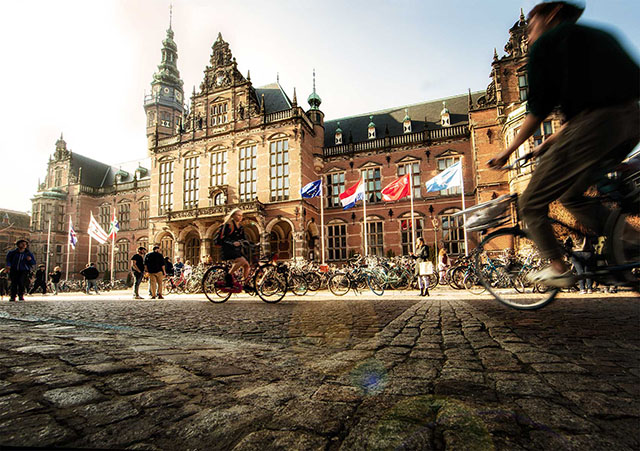
Source: University of Groningen
University of Groningen Tuition Fees and Living Costs for 2027–28
When planning to study in the Netherlands, tuition fees and living expenses are important considerations for Hong Kong students and their families.
Tuition fees at the University of Groningen vary depending on the applicant's fee status, faculty and chosen degree programme. In particular, EU/EEA and non-EU/EEA students are subject to different fee arrangements.
According to the university's published 2027–28 academic year tuition information, the statutory tuition fee for eligible full-time bachelor's students is generally €2,771 per year.
Most Hong Kong students who do not qualify for statutory tuition fees will instead be charged the applicable non-EU/EEA international tuition fees.
For example, the 2027–28 undergraduate tuition fee for non-EU/EEA students at the Faculty of Economics and Business is €14,400 per year, while the Faculty of Science and Engineering charges €19,800 per year. Fees for professional programmes such as Medicine and Dentistry can reach €32,000 per year.
Some specialist degree programmes may have different tuition fees, so applicants should always consult the latest official fee information for their chosen course.
In addition to tuition fees, students need to budget for accommodation, food, health insurance, transport, study materials and personal expenses.
The estimated monthly living budget used in this guide is approximately €1,200–€1,600, although actual costs will vary depending on accommodation arrangements and personal spending habits.
When preparing a study abroad budget, students should also account for annual accommodation costs, return flights to Hong Kong and one-off expenses associated with moving overseas.
As student accommodation is in high demand in some Dutch university cities, applicants are encouraged to explore housing options early to avoid difficulties before the start of their studies.
University of Groningen IB, A-Level and HKDSE Entry Requirements
The University of Groningen accepts a range of international qualifications for entry to its bachelor's degree programmes, including the International Baccalaureate (IB), British GCE A-Levels and the Hong Kong Diploma of Secondary Education (HKDSE).
However, academic and subject-specific entry requirements vary by degree programme. Applicants should therefore check the criteria for their intended course before submitting an application.
University of Groningen HKDSE Entry Requirements
The University of Groningen accepts the Hong Kong Diploma of Secondary Education (HKDSE) for undergraduate applications.
According to the university's published entry requirements, Hong Kong applicants generally need to meet the following academic standards:
- Chinese Language, English Language and Mathematics: Level 3 or above in each subject
- Two elective subjects: Level 3 or above in each subject
- Citizenship and Social Development: Attained
In addition to these general HKDSE requirements, some popular degree programmes have specific subject prerequisites.
For example:
- International Business, Economics, Artificial Intelligence and Computing Science: Applicants must meet the relevant mathematics requirements
- Astronomy: Applicants must meet the required standards in mathematics and physics
- Chemical Engineering: Applicants must meet the requirements in mathematics, physics and chemistry
- Psychology and Global Politics & Sustainability: No additional subject-specific prerequisites are listed, although general admissions and any applicable selection requirements still apply
Meeting the general HKDSE requirements does not guarantee admission. The university will assess applicants' academic qualifications and subject backgrounds in relation to their chosen programme.
Students applying to English-taught courses may also need to submit IELTS, TOEFL or another recognised English language qualification.
Hong Kong applicants are advised to check the latest official University of Groningen entry requirements to ensure that their HKDSE results and elective subjects satisfy the criteria for their intended programme.
University of Groningen IB Entry Requirements
The University of Groningen accepts the International Baccalaureate Diploma (IB Diploma) for undergraduate admission.
Applicants are generally required to obtain the full IB Diploma and meet any additional subject-specific requirements for their chosen degree programme.
The following are examples of the requirements for selected courses:
- International Business, Economics and Business Economics, and Artificial Intelligence: Mathematics: Analysis and Approaches (AA) at SL or HL, or Mathematics: Applications and Interpretation (AI) at HL
- Computing Science: Mathematics AA at HL
- Astronomy: Mathematics AA at HL and Physics at HL
- Chemical Engineering: Mathematics AA at HL, together with Physics and Chemistry, with one at HL and the other at least at SL
- Psychology: No additional IB subject-specific requirements
- Global Politics & Sustainability: Mathematics AA or AI at SL or HL, with a passing grade in Mathematics
Holding an IB Diploma does not automatically guarantee admission. Some programmes may have additional admission or selection requirements, and applicants may need to provide recognised evidence of English language proficiency.
Students should confirm the required IB subjects, Higher Level (HL) and Standard Level (SL) combinations, and English language conditions for their chosen programme before applying.
University of Groningen A-Level Entry Requirements
The University of Groningen accepts British GCE A-Level qualifications for admission to its bachelor's degree programmes.
According to the university's published requirements, applicants generally need at least three recognised academic A-Levels, each graded between A and C*, supported by official GCE A-Level certificates.
Some programmes also require specific A-Level subjects. Examples include:
- International Business, Economics and Business Economics, Artificial Intelligence and Computing Science: Mathematics at A-Level
- Astronomy: Mathematics and Physics at A-Level
- Chemical Engineering: Mathematics, Physics and Chemistry at A-Level
- Psychology and Global Politics & Sustainability: No additional subject-specific A-Level requirements, although general entry and relevant selection conditions still apply
Applicants should note that not all A-Level subjects are accepted towards the minimum three academic A-Levels.
For example, subjects such as Accounting, Art & Design, Information Technology, and Travel and Tourism are not counted towards this requirement under the university's stated criteria.
Meeting the general A-Level requirements does not guarantee admission. Applications are assessed according to the chosen degree programme and the applicant's academic background.
Students applying for English-taught courses may also need to provide IELTS, TOEFL or another recognised English language qualification.
Applicants should check that their A-Level subjects are recognised by the university and that they meet the subject-specific and English language requirements of their intended programme.
University of Groningen IELTS and TOEFL English Language Requirements
International students applying to English-taught bachelor's degree programmes at the University of Groningen generally need to demonstrate their English language proficiency through IELTS Academic, TOEFL iBT or another recognised English language qualification.
According to the university's 2027–28 academic year English language requirements, IELTS score requirements vary by degree programme.
- IELTS 6.0 (minimum 6.0 in each component): International Business, Economics and Business Economics, Artificial Intelligence, Computing Science, Astronomy, Chemical Engineering, Global Politics & Sustainability and other programmes
- IELTS 6.5 (minimum 6.0 in Listening and Reading, and 6.5 in Speaking and Writing): Psychology, International Relations and International Organization, Liberal Arts and Sciences and other programmes
- IELTS 7.0 (generally at least 6.5 in each component): International and European Law and certain other programmes. For the specified law bachelor's programme, the minimum Listening and Reading requirements are 6.0
Important: Some bachelor's programmes within the Faculty of Economics and Business have exceptions to the usual IELTS 6.0 component requirements, allowing minimum scores of 5.5 in Listening and Reading.
Applicants to other programmes should check the individual component requirements for their relevant admissions level.
In addition to IELTS, the university accepts recognised qualifications including TOEFL iBT, Cambridge English and Pearson PTE Academic.
As TOEFL iBT introduced a revised scoring system in 2026, applicants should refer to the university's current score requirements when preparing for the examination.
Certain applicants may qualify for an English language test exemption, including:
- IB applicants: Students holding an International Baccalaureate Diploma taught in English, subject to the university's exemption criteria
- A-Level applicants: Students with recognised GCE A-Level qualifications issued by an accepted British examination board, with at least three relevant subjects graded A to C
- Other qualifications: Applicants meeting the university's specified exemptions relating to English-taught qualifications and countries or regions
HKDSE applicants should not assume that an English Language result or attendance at an English-medium secondary school automatically qualifies them for an exemption. They should check whether separate evidence of English proficiency is required.
Students are advised to confirm the IELTS or TOEFL requirements and any applicable exemptions for their chosen degree programme and allow sufficient time to take the necessary tests and submit their results.
University of Groningen 2027 Application Process and Deadlines
Students planning to apply for a bachelor's degree at the University of Groningen for the 2027–28 academic year generally need to register through Studielink, the Dutch higher education application platform.
They must then follow the university's instructions to submit the required documents through its Progress Portal.
Before applying, students should confirm the academic qualifications, subject prerequisites and English language requirements for their intended degree programme.
After registering through Studielink, applicants will generally be asked to upload academic transcripts, certificates, evidence of English language proficiency and any other relevant documents.
Some programmes may require additional application materials or participation in a selection procedure.
Applications for the University of Groningen's 2027–28 academic year opened on 1 October 2026.
For bachelor's programmes beginning in September 2027, certain numerus fixus programmes, including International Business and Psychology, have an application deadline of 15 January 2027.
The general application deadline for many other bachelor's programmes is 1 May 2027.
Some faculties may also offer Early Bird application arrangements, allowing eligible international applicants who complete their applications by a specified date to receive an earlier admissions assessment.
However, deadlines and procedures can vary between programmes and intakes, so students should always refer to the latest information published for their chosen course.
Hong Kong students who require a Dutch student visa or residence permit should also allow sufficient time to prepare supporting documents, arrange tuition fee payments and secure accommodation.
Applying early can make it easier to plan the transition to studying overseas.
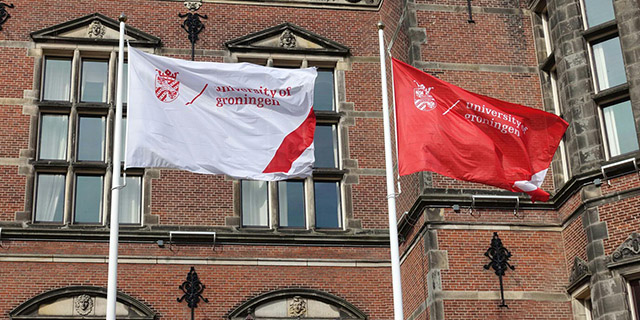
Source: University of Groningen
Is It Difficult to Get Into the University of Groningen?
The University of Groningen is a research university, and the difficulty of gaining admission depends on the applicant's qualifications, chosen degree programme and subject background.
In general, applicants must hold qualifications considered equivalent to the Dutch pre-university education diploma (VWO) and satisfy the relevant English language requirements.
For Hong Kong students, whether HKDSE, IB or A-Level results meet the university's entry standards depends on the university's assessment of the qualification and the specific requirements of the intended programme.
Certain science and engineering programmes have additional mathematics or science prerequisites, while numerus fixus programmes such as International Business and Psychology may require applicants to complete a separate selection procedure.
Therefore, meeting the minimum entry requirements does not guarantee an offer of admission.
Students should consider their academic achievements, subject interests and English language proficiency alongside the university's international rankings when assessing their chances of admission and choosing suitable programmes.
Planning to Apply to the University of Groningen? Let Grove Education Help You Study in the Netherlands!
With more than 400 years of academic history, the University of Groningen is a well-established European research university offering a broad range of degree programmes and opportunities for academic development.
For Hong Kong students interested in studying business, psychology, artificial intelligence or other subjects in the Netherlands, it is a university worth considering.
However, preparing a successful overseas university application involves more than comparing QS rankings and popular courses. Students also need to understand the relevant HKDSE, IB and A-Level entry requirements, IELTS and TOEFL standards, tuition fees and application deadlines.
If you are planning to apply to the University of Groningen for 2027 entry but are unsure about course selection, admission requirements or the Dutch university application process, Grove Education is here to help.
Our experienced overseas education consultants can provide personalised guidance based on your academic background, interests and future career aspirations, helping you plan and prepare your university applications more effectively.
Contact Grove Education today to learn more about the University of Groningen and other universities in the Netherlands, and take the next step towards studying in Europe!
Reference:
1. Coimbra Group - List of members
2. University of Groningen - Key figures
3. QS Top Universities - QS World University Rankings 2026: Top global universities
4. QS Top Universities - University of Groningen : Rankings, Fees & Courses Details
5. QS Top Universities - QS World University Rankings by Subject 2025
6. Times Higher Education - University of Groningen
7. University of Groningen - UG offers the best Bachelor’s degree programme in the Netherlands
8. University of Groningen - Living expenses
9. University of Groningen - Entry Requirement
10. University of Groningen - English Language Requirements