For many students preparing for the DSE, aside from the highly competitive funded programmes at the eight major universities, another topic of interest is the SSSDP. But what does SSSDP mean? It is a government-funded scheme known as the "Study Subsidy Scheme for Designated Professions/Sectors." This initiative not only encompasses several SSSDP universities and institutions but also alleviates students' financial burdens regarding tuition fees. To successfully enrol, students must meet specific SSSDP qualifications. This article aims to provide a comprehensive guide for DSE candidates and their parents, outlining how SSSDP operates and the key points for application, assisting you in planning the ideal pathway for further education!
What is SSSDP?
SSSDP stands for the "Study Subsidy Scheme for Designated Professions/Sectors." In simple terms, it signifies that the government encourages students to pursue careers in high-demand professional fields such as nursing, construction, testing and certification, and creative industries through financial assistance.
Unlike traditional funded programmes at the eight major universities, the courses under SSSDP are primarily offered by self-financed institutions. However, the tuition fees are directly subsidised by the government, and the degree allocation is managed through JUPAS (Joint University Programmes Admissions System). This scheme was launched by the Education Bureau in 2014. As the programme has developed, the number of participating SSSDP institutions has increased, covering various self-financing institutions that have been granted university status [1].
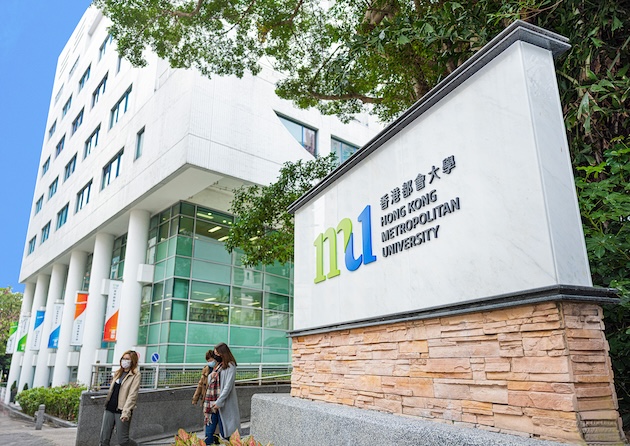
Source: Hong Kong Metropolitan University
List of Participating SSSDP Universities and Institutions
Currently, there are several institutions involved in the SSSDP scheme, including many that have attained university status. Below is the latest list of primary SSSDP universities [2]:
| Institution Type | Institution Name |
|---|---|
| Private Universities | Hong Kong Metropolitan University (HKMU), St. Francis University (SFU), Hong Kong Shue Yan University (HKSYU), Hong Kong Heng Seng University (HSUHK) |
| Self-financed Institutions | Vocational Training Council (VTC - THEi) |
| Tertiary Colleges | Hong Kong Chiu Chow College (HKCHC), Tung Wah College (TWC), University of Wollongong in Hong Kong (UOWCHK) |
Number of Funded Courses and Covered Areas under SSSDP
The SSSDP scheme funds a variety of courses that cover multiple high-demand sectors to ensure graduates can swiftly enter the workforce. Below is the latest information on funded courses for the 2026/27 academic year:
Bachelor’s Degree Course Areas
- Funding Scale: Funding is provided for 57 bachelor's degree programmes across eight participating institutions, offering a total of 4,781 places. Among these, 57 are first-year bachelor's degree programmes, providing 3,425 places. Additionally, there are 45 top-up degree programmes with 1,356 places available.
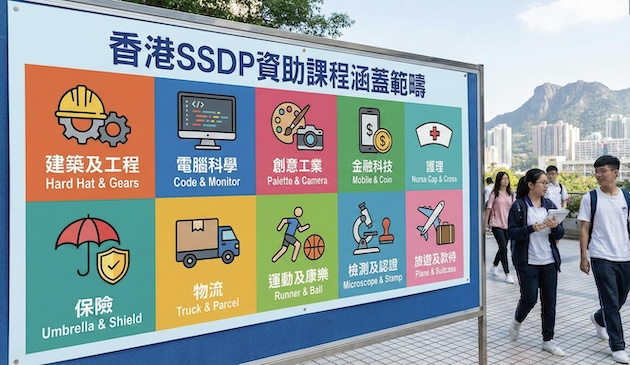
- High-Demand Areas: These include construction and engineering, computer science, creative industries, fintech, nursing, insurance, logistics, sports and recreation, testing and certification, and tourism and hospitality.
- Applied Degree Programmes: There are 16 applied degree programmes that will receive additional funding to further enhance career-oriented education at the tertiary level.
Associate Degree Course Areas
- Funding Scale: Funding is provided for 32 associate degree programmes across six institutions, offering 2,131 places.
- High-Demand Areas: These include construction and engineering, computer science, creative industries, nursing, sports and recreation, testing and certification, and tourism and hospitality.
Funding Amounts for SSSDP Courses
According to the latest announcements from the Education Bureau in September and November 2025, the funding amounts for the 2026/27 academic year will remain at recent high levels, ensuring that students can pursue professional courses at reasonable tuition rates [3][4]. Below are the latest funding amounts for bachelor's and associate degree programmes:
Funding Amounts for Bachelor’s Degree Courses
For students enrolled in bachelor's degree programmes under the SSSDP, the funding amounts for the current year are as follows:
Laboratory-Based Courses: The annual funding amount remains at HK$81,450. These courses typically involve extensive laboratory training or the operation of specialised equipment, such as nursing and physiotherapy.
Non-Laboratory Courses: The annual funding amount is maintained at HK$46,780, applicable to professional fields such as business, logistics, and fintech.
Applied Degree Programmes (Additional Annual Funding):
- Laboratory-Based (e.g., Radiographic Diagnostic Science): HK$89,620
- Non-Laboratory-Based (e.g., Applied Gerontology): HK$51,880
Funding Amounts for Associate Degree Courses
For associate degree and higher diploma programmes, the latest annual funding standards are as follows:
- Laboratory-Based Courses: The annual funding amount is HK$40,730.
- Non-Laboratory-Based Courses: The annual funding amount is HK$23,390.
Source: Gemini
SSSDP Eligibility Criteria
To successfully obtain funding, applicants must clearly understand the eligibility criteria for the SSSDP scheme. This programme is not open to all students and mainly caters to the following groups [5]:
- Local Students: Must possess Hong Kong permanent residency or relevant valid documents.
- Students Holding HKDSE Qualifications: Most places are reserved for students participating in JUPAS.
Admission Application Thresholds
- Bachelor's Degree: Applicants must meet the minimum entry requirements for the relevant programmes, typically HKDSE "332A2" (Chinese and English at Level 3, Mathematics at Level 2, satisfactory grade in Citizenship and Social Development, and Level 2 in one elective subject).
- Associate Degree: Applicants must achieve "Level 2 in five subjects" in the HKDSE (including Chinese and English) or complete the Diploma in Applied Education / Yi Jin Diploma / Vocational Training Council Foundation Diploma.
SSSDP Application Process
The application process for SSSDP varies based on the degree level, and students must pay close attention to the following procedures to ensure they do not miss their chance to secure funding [5].
Bachelor's Degree Courses
Students need to select courses that start with the code "JSS" within the JUPAS system and add them to their school choice list. It is advisable to reserve spots for popular SSSDP university courses among the first three choices in Band A to increase admission chances.
Associate Degree Courses
- E-APP Pre-registration: Students can submit applications via the Electronic Advance Application Platform (E-APP). Typically, the first round of interviews occurs before the DSE results are released, offering "Conditional Offers."
- Direct Application to Institutions: In addition to E-APP, students may also directly apply through the official websites or admissions offices of the relevant SSSDP universities, such as Tung Wah College, VTC, etc.
Source: Gemini
智禾教育:助你最適合的 SSSDP Grove Education: Assisting You in Choosing the Right SSSDP Programme
SSSDP offers students a high-quality pathway for further education beyond the eight major universities. By thoroughly understanding the strengths of the various institutions and making choices based on personal interests and abilities, every student can thrive in their chosen professional field.
If you still have questions about what SSSDP entails, the application processes for SSSDP universities, or any other concerns, we welcome you to consult with the professional advisory team at Grove Education. We will tailor a suitable strategy based on each student's predicted DSE results and interests, ensuring a smoother journey towards higher education.
References:
3. The Government of the Hong Kong Special Administrative Region - Press Releases - EDB announces Study Subsidy Scheme for Designated Professions/Sectors for 2026/27 cohort - undergraduate programmes
4. The Government of the Hong Kong Special Administrative Region - Press Releases - EDB announces Study Subsidy Scheme for Designated Professions/Sectors for 2026/27 cohort - sub-degree programmes
5. SSSDP - Application and Admission